
What's Happening?
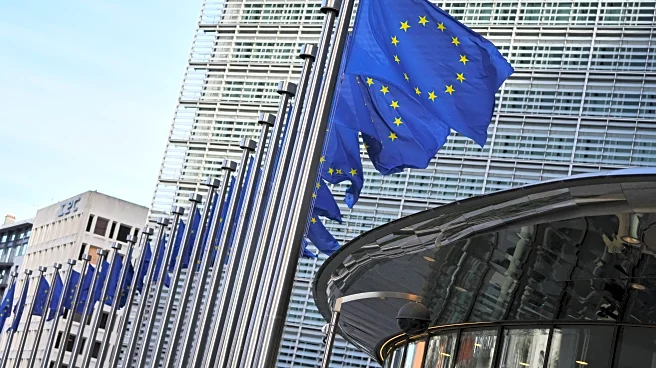
Ammonia Europe, an industry body, has expressed strong opposition to the European Commission's proposal to remove most-favoured nation (MFN) import tariffs on ammonia. This move is intended to mitigate
the impact of the EU's carbon border adjustment mechanism (CBAM) on fertilizers. The EU announced plans to suspend standard import tariffs on ammonia and urea following a meeting of EU agriculture ministers on January 7, with potential extensions to other fertilizer products. The commission's reference to Article 27a has caused confusion, suggesting a possible temporary suspension of CBAM if it severely harms the EU internal market. Ammonia Europe argues that removing MFN tariffs fails to address Europe's energy cost crisis and carbon leakage protection, as fertilizer prices remain significantly above their 2020 average. The industry body emphasizes that the removal of tariffs could weaken the EU's industrial base by rewarding imports produced with cheaper energy and higher carbon intensity.
Why It's Important?
The proposed removal of MFN tariffs on ammonia is significant as it highlights the EU's struggle to balance environmental policies with economic competitiveness. The decision could impact the European fertilizer industry, which is already facing high energy costs and competition from non-EU producers who do not incur equivalent carbon costs. By potentially undermining the EU's industrial base, the tariff removal could lead to capacity closures in the chemical sector, affecting not only fertilizers but also other industries reliant on ammonia, such as pharmaceuticals and plastics. This development underscores the broader challenge of implementing climate policies without compromising economic stability and competitiveness.
What's Next?
The European Commission's proposal to remove MFN tariffs on ammonia is still subject to formal approval by both the European Parliament and the Council of the EU. As the debate continues, stakeholders in the fertilizer and chemical industries are likely to lobby for policies that address the root causes of Europe's competitiveness crisis, such as high energy costs. The outcome of this decision could set a precedent for how the EU balances environmental goals with economic realities, potentially influencing future policy decisions related to carbon pricing and industrial competitiveness.