






What's Happening?
Scientists at UC San Francisco have made a significant breakthrough in understanding epilepsy by discovering that 'brain blips,' or interictal epileptiform discharges (IEDs), are not random events. These brief bursts of abnormal brain activity can be
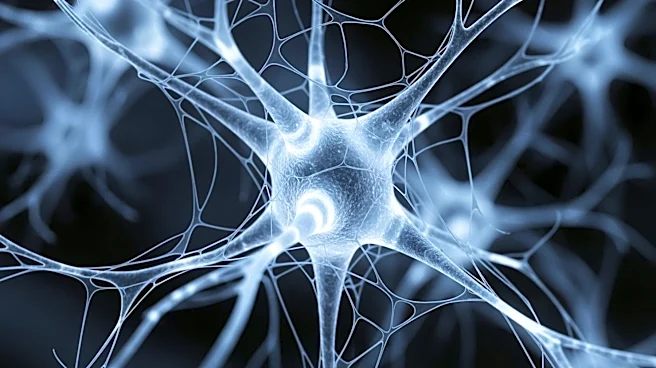
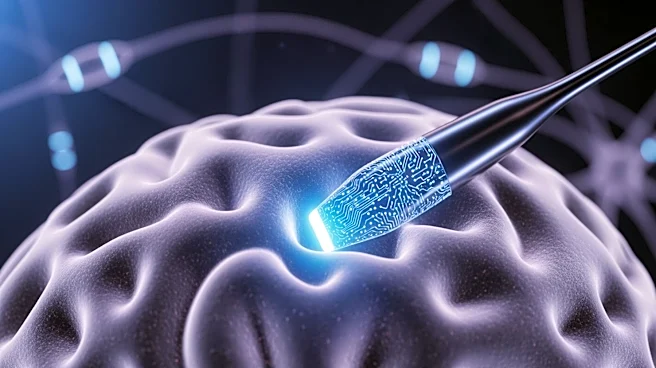
predicted a full second before they occur, using high-resolution technology that records the activity of individual neurons. The study involved tracking over 1,000 neurons in four patients undergoing epilepsy surgery. The researchers used Neuropixels probes, which offer a three-dimensional view of brain activity, to observe the sequential activation of neurons during IEDs. This discovery could lead to new ways to prevent these disruptions, which interfere with attention, memory, language, and sleep, and contribute to cognitive impairment in epilepsy patients.
Why It's Important?
The ability to predict and potentially prevent IEDs could revolutionize the quality of life for epilepsy patients. Currently, about half of those with epilepsy experience cognitive impairments due to these frequent brain disruptions. The study suggests that implantable devices could be developed to detect the early warning signals of IEDs and intervene before they occur. This proactive approach could shift treatment from reacting to abnormal brain activity to preventing it, offering a significant advancement in epilepsy management. The research highlights the potential for improved cognitive function and reduced seizure frequency, benefiting both patients and healthcare systems by reducing the need for more invasive treatments.
What's Next?
The next steps involve developing and testing devices that can utilize the early warning signals identified in the study to prevent IEDs. Researchers will likely focus on refining the technology to ensure it is safe and effective for broader clinical use. Collaboration with medical device companies could accelerate the development of such neurostimulators. Additionally, further studies may explore the application of this technology to other neurological conditions characterized by similar brain activity patterns. The findings could also prompt discussions among healthcare providers and policymakers about integrating these advancements into standard epilepsy care.