








What's Happening?
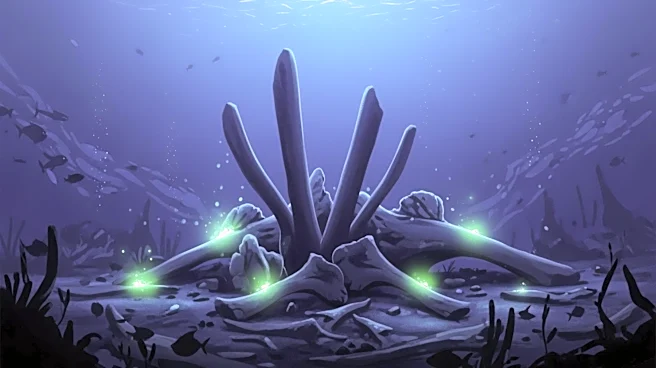
The deepest and most extensive whale graveyard has been discovered in the southeastern Indian Ocean, with fossils dating back over 5 million years. The site, located in the Diamantina fracture zone, contains nearly 800 skeletons per square kilometer,
including both modern and extinct species. The discovery, published in Nature, highlights the biodiversity of deep-sea ecosystems and the role of whale falls in supporting marine life. The site is home to various species, some of which may be new to science, and provides insights into the evolution and dispersal of deep-sea life.
Why It's Important?
The discovery of this whale graveyard offers significant insights into the biodiversity and ecological processes of deep-sea environments. Whale falls are crucial for supporting diverse marine life by providing a concentrated source of nutrients. The findings highlight the role of whale falls in carbon sequestration and their potential as evolutionary hotspots for deep-sea species. Understanding these ecosystems can inform conservation efforts and enhance knowledge of deep-sea biodiversity, which is essential for protecting marine habitats and mitigating climate change impacts.
What's Next?
Further research is needed to explore the ecological dynamics of the whale graveyard and its role in deep-sea biodiversity. Scientists aim to study the interactions between whale falls and other deep-sea ecosystems, such as hydrothermal vents and cold seeps. The discovery may lead to the identification of new species and a deeper understanding of deep-sea life. Continued exploration could inform conservation strategies to protect these unique habitats and the species that depend on them.