





What's Happening?
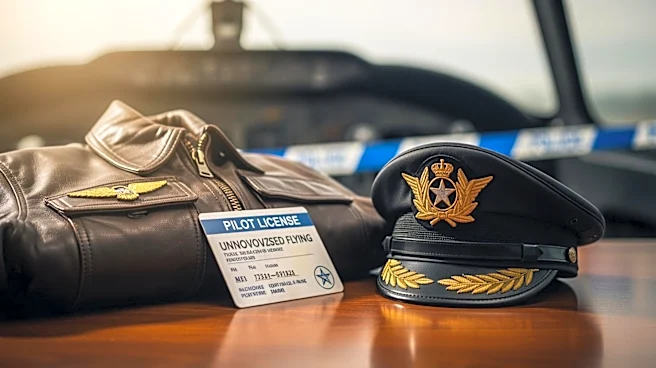
Geoffrey Wall, a former Air Canada pilot, has been arrested and faces criminal charges for flying over 900 flights without the required captain's license. Wall, who captained Boeing aircraft for nearly 17 years, was discovered to have never obtained the mandatory
Airline Transport Pilot License for Aeroplanes (ATPL-A) necessary for his role as captain. Despite this, Air Canada maintains that safety was not compromised, as Wall underwent regular competency training and passed all flight checks. The investigation, dubbed 'Project Icarus,' revealed anomalies in Wall's pilot license documentation during a routine credential check in 2025, leading to his arrest on June 1, 2026. Wall faces seven criminal charges, including fraud over $5,000 and possession of a counterfeit mark, and is expected to appear in court on June 29, 2026.
Why It's Important?
This incident highlights significant vulnerabilities in the aviation industry's credential verification processes. The fact that Wall was able to fly for nearly two decades without the proper licensing raises concerns about the effectiveness of regulatory oversight and the potential risks to passenger safety. While Air Canada asserts that safety was maintained through regular training, the situation underscores the importance of stringent checks and balances in ensuring pilot qualifications. The case also serves as a reminder of the critical role that licensing plays in maintaining trust and safety in the airline industry, potentially prompting reviews and reforms in pilot credential verification processes across the sector.
What's Next?
Wall's upcoming court appearance on June 29, 2026, will likely bring further scrutiny to the case and may lead to broader discussions on regulatory practices within the aviation industry. Air Canada and other airlines may face pressure to enhance their credential verification systems to prevent similar incidents. Additionally, Transport Canada and other regulatory bodies might consider implementing more rigorous checks to ensure compliance with licensing requirements. The outcome of Wall's trial could influence future policies and practices aimed at safeguarding passenger safety and maintaining industry standards.
Beyond the Headlines
The case of Geoffrey Wall draws parallels to the 2002 film 'Catch Me If You Can,' where a teenager successfully impersonates a pilot. This real-life scenario raises ethical questions about the ease with which individuals can misrepresent qualifications in highly regulated professions. It also highlights the potential for systemic failures in detecting fraudulent credentials, which could have far-reaching implications for other industries reliant on professional licensing. The incident may prompt a cultural shift towards prioritizing transparency and accountability in professional certifications, reinforcing the need for robust verification mechanisms.