








What's Happening?
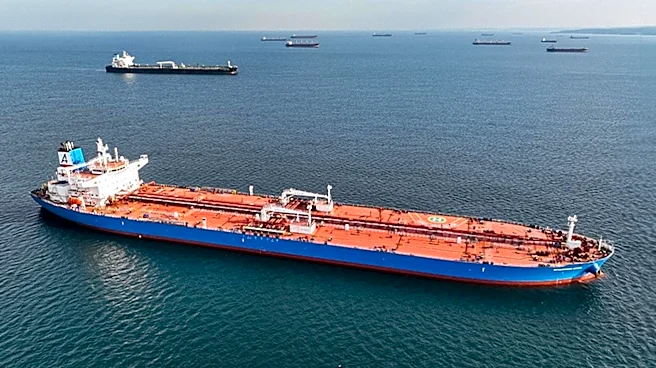
Burevestmarin LLC, the Russian owner of the oil tanker Bella 1, claims that U.S. authorities improperly sold their seized vessel to a maritime scrap dealer for significantly less than its market value. According to court papers filed by the company's
lawyers, the sale was an 'economically irrational' deal designed to prevent the owner from recovering the ship. The Bella 1 was seized by the U.S. military in the North Atlantic in early January 2026, following a weeks-long pursuit. U.S. authorities stated they believed the tanker was carrying illegal Iranian oil and was attempting to evade an American blockade of Venezuela. However, attorneys for Burevestmarin LLC dispute the claim that the vessel was transporting Iranian oil. The company's lawyers assert that the ship was sold for $9.1 million, which they argue is well below the $21 million it would be worth as scrap metal alone, let alone its 'substantially greater value' as an operational commercial vessel. The Justice Department has been ordered to respond to these allegations by Friday morning.
Why It's Important?
This dispute highlights potential legal and economic ramifications concerning U.S. enforcement actions against vessels suspected of violating sanctions. If the allegations of an improper sale are substantiated, it could raise questions about the transparency and fairness of asset forfeiture procedures conducted by U.S. authorities. The claim that the sale was 'economically irrational' and conducted 'behind closed doors' suggests a potential disregard for due process and fair market practices, which could invite scrutiny from international maritime law bodies and legal experts. For Burevestmarin LLC, the outcome of this case will determine whether they can recover their asset or receive fair compensation. For the U.S. government, a ruling against them could set a precedent that complicates future seizures and sales of assets linked to sanctions violations, potentially impacting the effectiveness of such enforcement measures. The case also underscores the ongoing tensions and legal battles surrounding international sanctions and maritime trade.
What's Next?
The immediate next step is the Justice Department's response to Burevestmarin LLC's allegations, due by Friday morning. This response will likely outline the U.S. government's justification for the sale and address the claims of undervaluation and lack of transparency. Following this, the court will likely review the arguments from both sides to determine the validity of the sale and whether any impropriety occurred. Depending on the court's decision, Burevestmarin LLC could pursue further legal action to either reclaim the vessel or seek additional compensation. This case may also prompt a broader review of the U.S. government's procedures for handling seized assets, particularly those involved in international disputes. The outcome could influence future U.S. strategies in enforcing sanctions and managing seized foreign assets, potentially leading to revised protocols to ensure greater transparency and adherence to market values.
Beyond the Headlines
This case delves into the complex intersection of international law, economic sanctions, and property rights. The accusation of an 'economically irrational' sale raises ethical questions about the government's responsibility to manage seized assets in a manner that is both effective for enforcement and fair to the asset owners, even when those owners are from adversarial nations. The dispute over the vessel's true value—whether as scrap or an operational commercial ship—underscores the subjective nature of asset valuation in contentious legal contexts. Furthermore, the incident could fuel broader debates about the scope of U.S. jurisdiction in international waters and the methods employed to enforce blockades and sanctions. The legal battle may also expose vulnerabilities in the current legal framework for handling seized foreign assets, potentially leading to calls for reforms to prevent similar disputes in the future and ensure that such actions are perceived as legitimate and just on the global stage.