






What's Happening?
The Beacon's KC Documenters program, which trains and pays residents to cover municipal meetings, has expanded its scope to include observations of neighborhood issues. Recently, newly trained Documenters were tasked with identifying and reporting on aspects
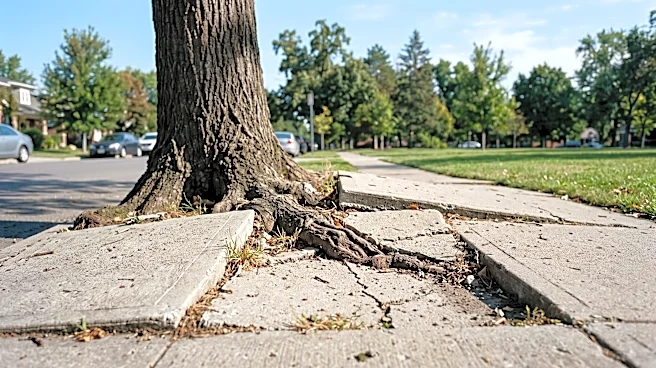
of their local environment that piqued their interest. Brandee Collins, a Documenter from North Kansas City, reported on a seemingly operational but closed Save A Lot grocery store on Burlington Street. The store's signage and payment decals remain intact, advertising services like online delivery and acceptance of federal food benefits (EBT), despite the store being closed with only a handwritten 'Closed' sign on the door. This closure leaves residents without a supermarket within walking distance, with the nearest options being approximately three miles away. Laura Mangan, a Documenter from South Hyde Park, highlighted the hazardous condition of sidewalks near Gillham Park due to tree roots, making them difficult for individuals with mobility aids. Anna Neumann from City Market observed the impact of a viral TikTok video on the Italian Sausage Co., which led to overwhelming demand and temporary closures. Walter Winch from Beacon Hill questioned the environmental impact of traditional American lawns in newly developed areas.
Why It's Important?
These observations by KC Documenters underscore critical issues affecting the daily lives of Kansas City residents, particularly concerning access to essential services and urban infrastructure. The closure of the Save A Lot store in North Kansas City, while still appearing open, creates a 'food desert' for those without personal transportation, highlighting disparities in access to fresh food and the challenges faced by low-income residents who rely on federal food benefits. The deteriorating sidewalks near Gillham Park pose significant accessibility and safety concerns for individuals with limited mobility, emphasizing the need for urban planning that prioritizes pedestrian infrastructure and inclusivity. The experience of the Italian Sausage Co. illustrates the double-edged sword of viral social media attention for local businesses, bringing both unprecedented success and operational challenges. Lastly, the critique of traditional lawns in Beacon Hill raises important questions about urban sustainability, water conservation, and biodiversity in the face of climate change, prompting a reevaluation of urban landscaping practices.
What's Next?
The observations from the KC Documenters program are intended to inform the public and increase government accountability. For the closed Save A Lot, questions arise regarding the timeline for a replacement grocery store, the current ownership of the parcel, and whether nearby dollar stores or pharmacies accept EBT/WIC and offer fresh produce. For the hazardous sidewalks near Gillham Park, the Documenters' report prompts inquiries into the city's plans for repair, the availability of funds from the 2017 bond issue for sidewalk projects, and the progress on addressing the backlog. The Italian Sausage Co.'s experience may lead to discussions among local businesses about strategies to manage sudden surges in demand from social media virality. The observations on traditional lawns could spur further community dialogue and initiatives to promote natural landscaping throughout Kansas City, potentially influencing future urban development and environmental policies. The program's ongoing work will continue to bring local issues to light, potentially leading to community engagement and policy changes.
Beyond the Headlines
The issues identified by the KC Documenters reveal deeper systemic challenges within urban environments. The 'ghost' grocery store in North Kansas City points to potential regulatory gaps or lack of oversight regarding commercial property closures, especially in areas serving vulnerable populations. It also highlights the broader issue of food insecurity and the struggle for equitable access to healthy food options in urban cores. The sidewalk conditions in South Hyde Park reflect a common urban dilemma: balancing historical preservation (mature trees) with modern accessibility needs. This tension often leads to deferred maintenance and disproportionately impacts those with mobility challenges, raising questions about urban equity and infrastructure investment priorities. The Italian Sausage Co.'s viral success and subsequent operational strain underscore the unpredictable nature of the digital economy and the need for small businesses to adapt rapidly to online trends. Finally, the discussion around traditional lawns in Beacon Hill touches upon the cultural inertia in urban planning and the slow adoption of environmentally sustainable practices, despite growing awareness of climate change. These observations collectively highlight the complex interplay of economic, social, and environmental factors shaping urban life.