





What's Happening?
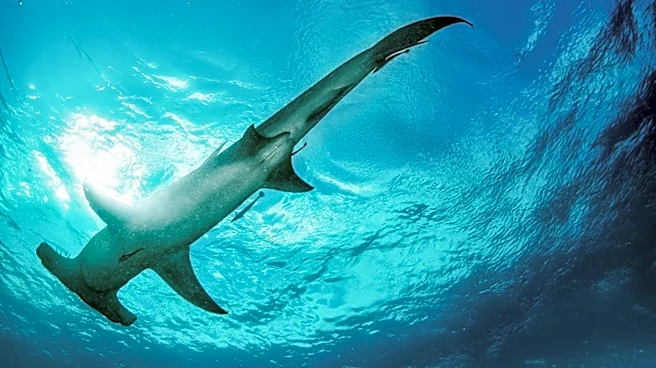
The great hammerhead shark, a species known for its distinctive cephalofoil, is facing critical endangerment due to overfishing and high demand for its fins. The species is heavily fished in tropical regions, with its fins being particularly valuable
in the Asian market for shark fin soup. The International Union for Conservation of Nature (IUCN) has assessed the great hammerhead as critically endangered, with populations declining significantly worldwide.
Why It's Important?
The decline of the great hammerhead shark has significant ecological implications, as it is an apex predator that plays a crucial role in maintaining the balance of marine ecosystems. The loss of such predators can lead to overpopulation of prey species, disrupting the food chain and affecting biodiversity. Economically, the decline of shark populations can impact fisheries and tourism industries that rely on healthy marine ecosystems.
What's Next?
Conservation efforts are needed to protect the great hammerhead shark from further decline. This includes implementing stricter fishing regulations, monitoring illegal fishing activities, and raising awareness about the ecological importance of sharks. International cooperation and policy changes are essential to ensure the survival of this species and the health of marine ecosystems.
Beyond the Headlines
The ethical considerations surrounding shark finning highlight the need for sustainable fishing practices and the protection of endangered species. The cultural demand for shark fins poses a challenge to conservation efforts, requiring a balance between cultural practices and environmental sustainability. Long-term, the decline of shark populations could lead to irreversible changes in marine biodiversity and ecosystem health.