






What's Happening?
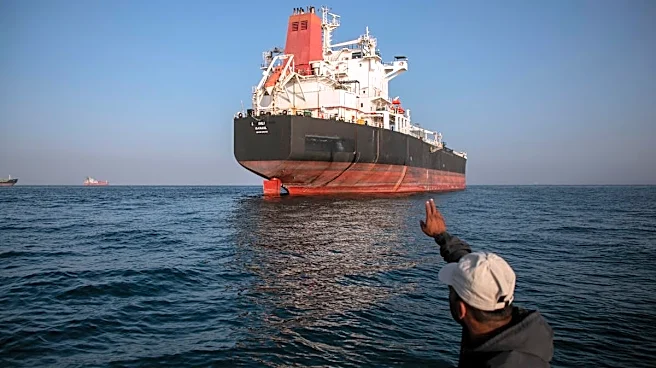
A proposed ceasefire deal between the U.S. and Iran aims to extend the current truce for 60 days and reopen the Strait of Hormuz. The agreement would allow Iran to sell oil freely and initiate talks on limiting its nuclear program. In exchange, Iran would clear mines
from the Strait and refrain from imposing tolls on ships. The U.S. would lift its blockade on Iranian ports, which has been in place since April. While the deal could lead to significant de-escalation, Iranian media reports suggest that the Strait would remain under Iranian control, raising concerns about the long-term implications of the agreement.
Why It's Important?
The reopening of the Strait of Hormuz is critical for global oil markets, as it is a major conduit for oil exports. The deal could stabilize oil prices and provide economic relief to countries dependent on oil imports. However, the agreement has sparked debate over its potential impact on regional security and Iran's nuclear ambitions. Critics argue that the deal may not sufficiently address Iran's influence in the region and its nuclear capabilities. The outcome of these negotiations could shape U.S. foreign policy and its relations with Middle Eastern allies, particularly Israel.
What's Next?
The finalization of the ceasefire agreement remains uncertain, with ongoing negotiations and potential modifications to the terms. Key stakeholders, including the U.S. administration and Middle Eastern allies, will continue to deliberate on the specifics of the deal. The U.S. Congress may also play a role in reviewing and potentially challenging the agreement. Additionally, the international community will closely monitor Iran's compliance with the terms, particularly regarding its nuclear program and military activities in the region. The outcome of these negotiations could have lasting implications for regional stability and U.S. foreign policy.