






What's Happening?
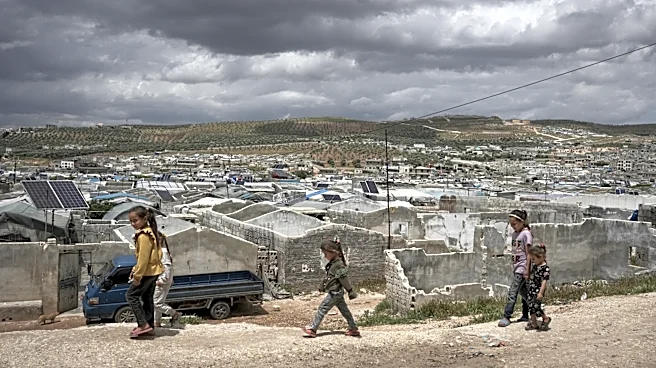
Syria, after enduring over a decade of war, sanctions, and economic collapse, is now drawing renewed interest from regional and international investors. The focus is on reconstruction opportunities in sectors such as energy, infrastructure, logistics,
real estate, and digital services. The World Bank estimates that Syria's reconstruction needs could range from $140 billion to $345 billion. Despite the potential for significant investment, the country remains a high-risk environment due to political uncertainty, unresolved sanctions, fragile institutions, and weak financial systems. Recent political and economic shifts, including Syria's return to the Arab League and renewed engagement with several Arab governments, have spurred interest. However, targeted sanctions and compliance risks continue to pose challenges for banks, contractors, and investors.
Why It's Important?
The reconstruction of Syria presents both significant opportunities and challenges for investors. The potential for rebuilding is vast, with sectors like electricity, real estate, and technology offering lucrative prospects. However, the risks are equally substantial, with political instability, sanctions, and weak governance posing major hurdles. The outcome of Syria's reconstruction efforts could have far-reaching implications for regional economic dynamics and geopolitical alignments. Investors who navigate these challenges successfully could gain early-entry advantages in a potentially lucrative market. Conversely, failure to address the underlying political and economic issues could derail investment efforts and prolong Syria's recovery.
What's Next?
As Syria continues to attract interest from investors, the focus will likely be on creating a more stable and conducive environment for investment. This includes addressing sanctions, improving financial systems, and ensuring political stability. The Syrian government is reportedly working to simplify administrative procedures and encourage partnerships to attract foreign capital. However, the success of these efforts will depend on the ability to resolve ongoing political and legal uncertainties. The international community's response, particularly in terms of sanctions relief and support for reconstruction, will also play a crucial role in shaping Syria's economic future.
Beyond the Headlines
The reconstruction of Syria is not just an economic opportunity but also a complex political and social challenge. Issues such as property disputes, refugee rights, and land ownership could significantly impact who benefits from rebuilding efforts. The potential return of refugees and internally displaced persons adds another layer of complexity, as it could increase demand for housing and services. Moreover, the reconstruction process will likely influence Syria's future political landscape, as various regional and international actors vie for influence over the country's strategic sectors.