






What's Happening?
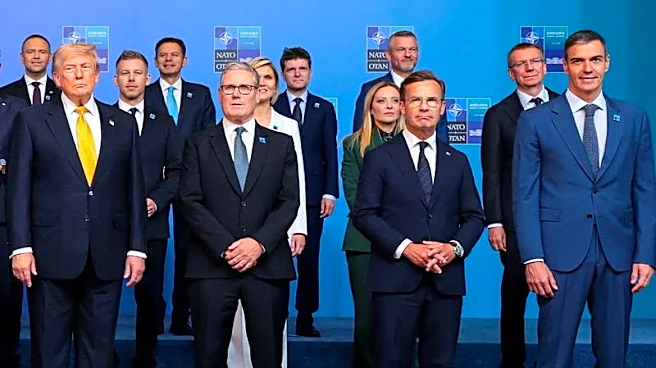
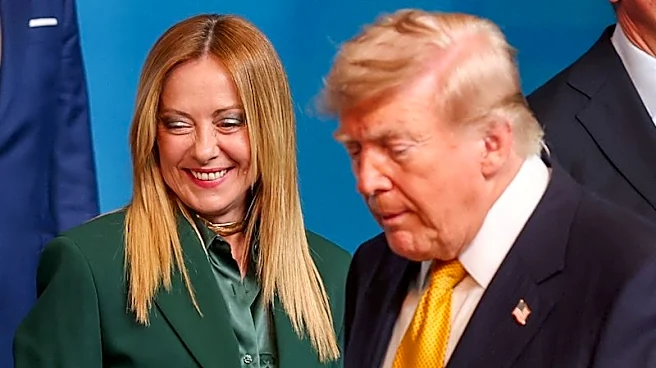
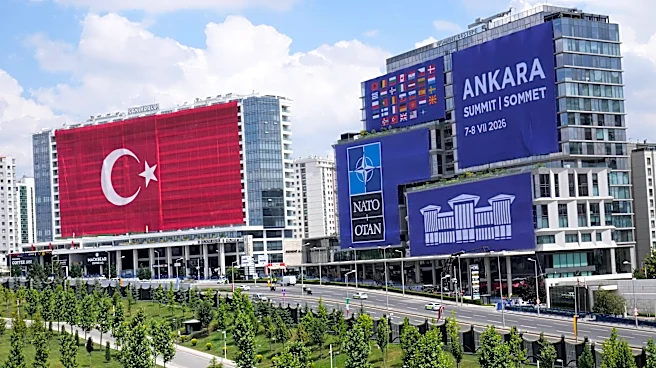
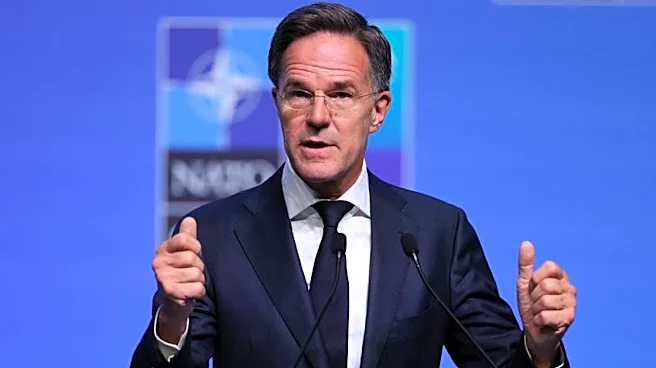
President Donald Trump made several false claims during a press conference at the NATO summit in Ankara. Among these, he inaccurately stated that $19.2 trillion had been invested in the U.S. during his presidency. The White House's own website lists $10.6
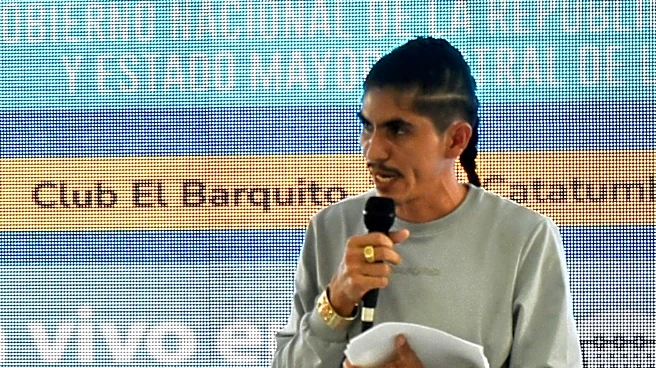
trillion in major investment announcements, which itself is an exaggeration, as it includes vague pledges related to bilateral trade rather than direct investment. Federal data shows new foreign direct investment in the U.S. was about $232 billion in 2025. Trump also claimed a record number of manufacturing plants were being built, but federal data indicates a decline in manufacturing construction spending during his second term. Additionally, Trump repeated false claims about winning the 2020 election and alleged that Venezuela opened prisons to send migrants to the U.S., a claim for which he has provided no evidence.
Why It's Important?
The false claims made by President Trump at the NATO summit have significant implications for public trust and international relations. Misstating investment figures can mislead the public and investors about the economic health of the U.S., potentially affecting market confidence. Trump's repeated falsehoods about the 2020 election and immigration policies could further polarize political discourse and undermine democratic processes. His unsubstantiated claims about Venezuela could strain diplomatic relations and impact U.S. foreign policy in Latin America. These inaccuracies highlight the importance of fact-checking and accountability in political communication.
What's Next?
The continuation of false claims by President Trump may prompt further scrutiny from media and fact-checking organizations. Political opponents and international leaders may respond to these inaccuracies, potentially affecting diplomatic relations and domestic political dynamics. The U.S. public and policymakers may demand greater transparency and accuracy in presidential communications. Additionally, these developments could influence the upcoming electoral landscape, as misinformation becomes a central issue in political campaigns.
Beyond the Headlines
The persistence of misinformation in political discourse raises ethical concerns about the responsibility of leaders to provide accurate information. It also highlights the role of media in holding public figures accountable and the challenges of combating misinformation in the digital age. Long-term, this trend could lead to increased public skepticism towards official statements and a demand for more rigorous fact-checking mechanisms. The cultural impact of such misinformation may contribute to a more divided society, where trust in institutions is eroded.