
What's Happening?
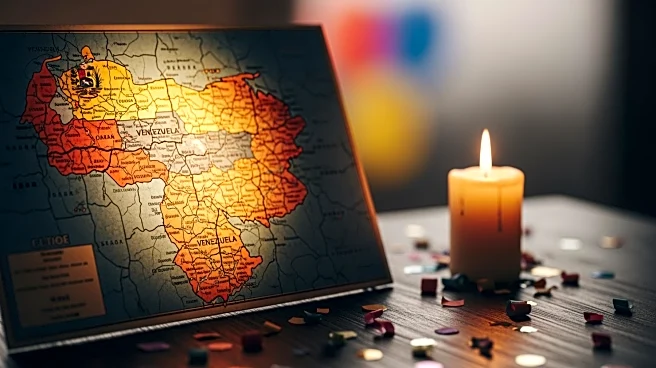
Venezuelan migrants worldwide celebrated the U.S.-led deposition of President Nicolas Maduro, marking the end of his government, which oversaw a significant migration exodus. Celebrations erupted in various
cities, including Santiago, Lima, and Madrid, as Venezuelans expressed joy over the fall of what they termed a dictatorship. The U.S. intervention led to Maduro's capture and removal from Venezuela, a move announced by President Trump. This development has been particularly significant for the 7.7 million Venezuelans who fled the country since 2014 due to economic hardships. The diaspora, especially in countries like Colombia and Peru, expressed hope for a return to a free Venezuela.
Why It's Important?
The deposition of Maduro is a pivotal moment for Venezuela and its diaspora, potentially altering the political landscape of the region. It signifies a shift in U.S. foreign policy under President Trump, who has promised to oversee a transition in Venezuela. This event could lead to the return of millions of Venezuelans who left due to economic and political instability. The change in leadership might also impact regional relations and migration patterns, as neighboring countries have absorbed large numbers of Venezuelan migrants. The U.S. involvement underscores its influence in Latin American politics and could set a precedent for future interventions.
What's Next?
Following the initial celebrations, questions about Venezuela's future governance and stability remain. The U.S. has indicated it will temporarily control Venezuela, with potential military involvement to ensure a smooth transition. The international community and Venezuelan opposition leaders are likely to play crucial roles in shaping the country's political future. The diaspora's return could lead to significant demographic and economic changes in Venezuela. Additionally, the global response to U.S. actions may influence future diplomatic relations and strategies in handling similar situations.