






What's Happening?
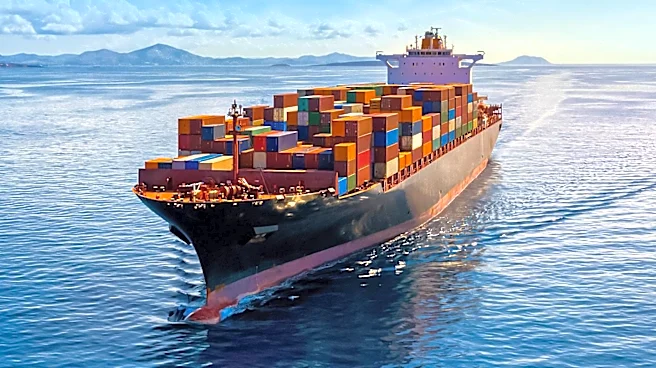
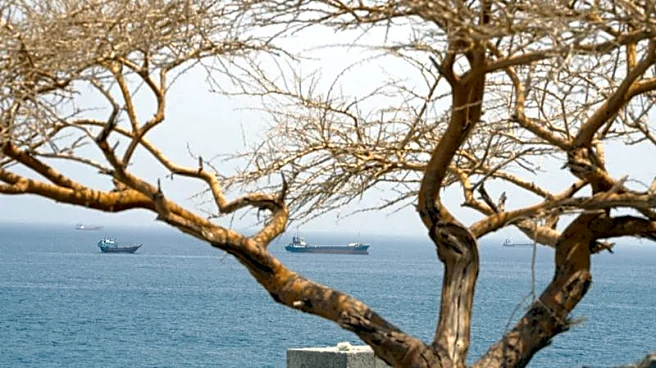
The United Nations Conference on Trade and Development (UNCTAD) has released its Review of Maritime Transport 2024, focusing on the strategic vulnerabilities posed by maritime chokepoints in the global economy. The report examines key corridors such as the Suez
Canal, the Strait of Hormuz, Bab el-Mandeb, the Strait of Malacca, and the Panama Canal. These chokepoints are critical for global trade and energy flows, yet they expose the global trading system to significant risks. The report distinguishes between vulnerability and fragility, arguing that while these chokepoints create strategic vulnerabilities, they do not necessarily render the global trading system fragile. Recent disruptions, such as the Ever Given blockage and climate-related constraints on the Panama Canal, have highlighted the need for resilience and adaptive capacity in global trade networks.
Why It's Important?
The significance of this report lies in its implications for policymakers, businesses, and security planners. Understanding the distinction between vulnerability and fragility is crucial for developing effective strategies to manage risks associated with maritime chokepoints. The report suggests that rather than attempting to eliminate all vulnerabilities, which is neither realistic nor economically efficient, stakeholders should focus on enhancing resilience through diversification, redundancy, and strategic planning. This approach can help mitigate the economic costs and strategic uncertainties associated with disruptions, ensuring the continuity of global trade. The findings underscore the importance of adaptive capacity in maintaining the stability of international commerce amid geopolitical tensions and environmental challenges.
What's Next?
The report suggests that future strategies should prioritize resilience over complete security. Governments and businesses are encouraged to invest in alternative transport corridors, resilient infrastructure, and flexible supply chain designs. This will involve balancing efficiency with flexibility to adapt to disruptions. Additionally, international cooperation and sustained investment in resilient infrastructure will be essential to manage the complex patterns of vulnerability arising from geopolitical rivalry, regional conflicts, and climate change. The report emphasizes that the future resilience of global maritime trade will depend on the ability to anticipate, absorb, and recover from disruptions while maintaining the overall functioning of international commerce.
Beyond the Headlines
The report highlights the broader implications of maritime chokepoints beyond immediate economic impacts. It points to the need for a more nuanced understanding of strategic risk, considering the interconnected nature of geopolitical, environmental, and technological challenges. The resilience of global trade networks is increasingly seen as a strategic asset that shapes geopolitical influence and national competitiveness. The report calls for a shift in focus from eliminating vulnerabilities to enhancing adaptive capacity, which will require more integrated approaches to maritime security and global supply chain governance.