





What's Happening?
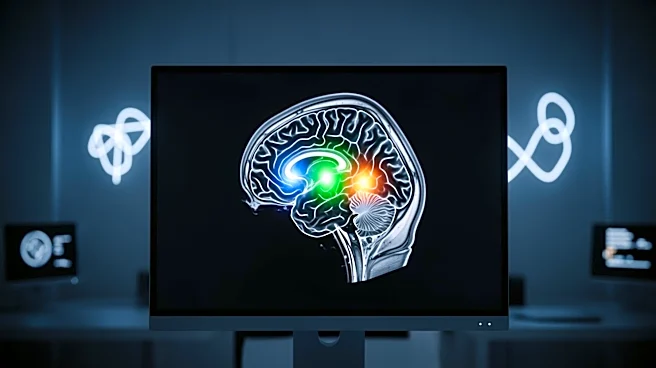
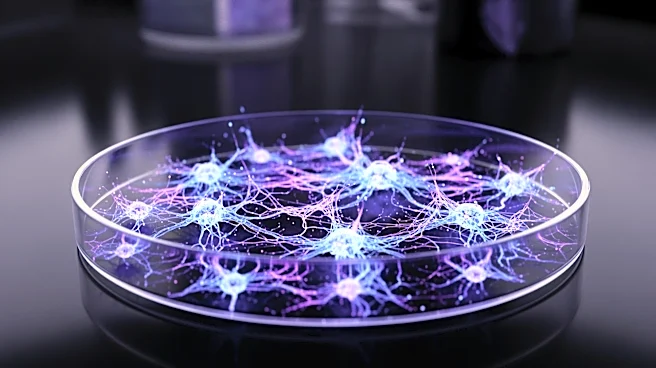
A recent study conducted by Christopher Lynn, an assistant professor of physics at Yale University, has uncovered that individual neurons operate in a surprisingly simple manner, akin to tiny on-off switches. This research, published in Nature Physics,
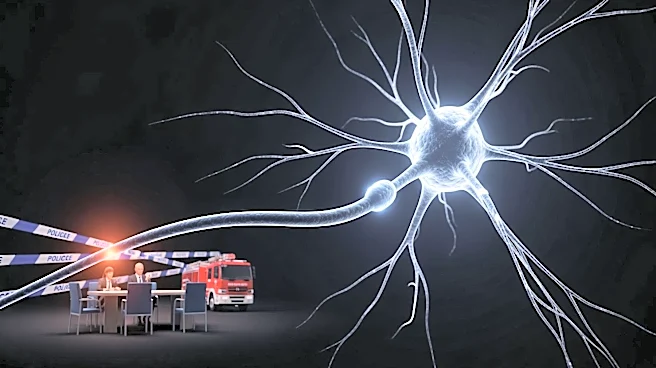
challenges the complexity traditionally associated with neuronal activity. Lynn's computational model divides neuron activity into three components: simple one input-one output interactions, complex interactions with multiple inputs, and 'latent noise' from synaptic randomness. The study found that 90% of neuronal activity in mice involved basic interactions, aligning with early neuron models from the 1940s. This discovery could reshape understanding of neuronal networks and their role in brain functions.
Why It's Important?
The findings from this study have significant implications for neuroscience, particularly in understanding how complex brain functions emerge from simple neuronal interactions. By demonstrating that neurons primarily operate through basic interactions, this research could influence the development of artificial neural networks and machine learning models, which are based on similar principles. Additionally, the study provides a foundation for further exploration into how neurons behave across different species, potentially leading to breakthroughs in understanding neurological disorders and brain development. This could ultimately impact the development of treatments and interventions for various brain-related conditions.
What's Next?
Following this study, Christopher Lynn plans to extend his research to compare neuronal activity across different species, which could reveal variations in neuronal behavior based on species complexity. This could lead to a deeper understanding of how neuronal networks evolve and function in different organisms. Additionally, the insights gained from this research may inform the design of more efficient artificial neural networks, enhancing machine learning technologies. The study also opens avenues for exploring the implications of simple neuronal interactions in neurological disorders, potentially leading to new therapeutic strategies.