





What's Happening?
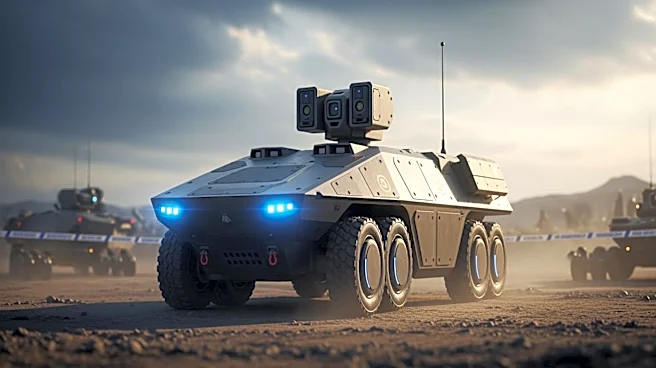
The U.S. Army is actively seeking an autonomous unmanned ground vehicle (UGV) to enhance battlefield logistics and casualty evacuation capabilities. According to a government notice, the UGV is intended to operate in the 'last tactical mile,' a perilous
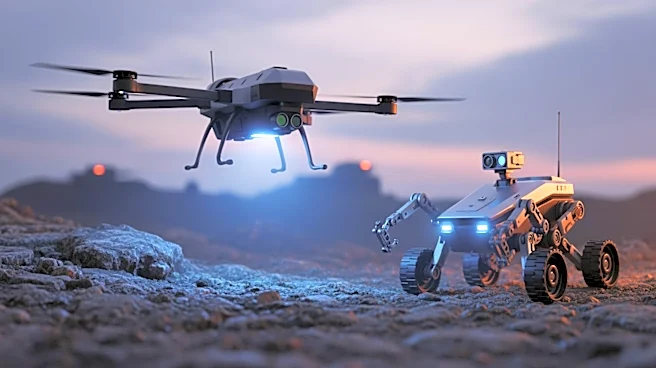
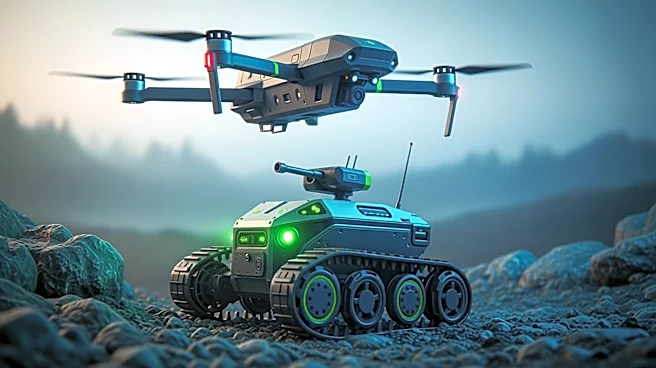
zone between support units and forward lines where supplies and casualties are most vulnerable to enemy attacks. The Army's interest in UGVs is driven by the need to mitigate risks to personnel and improve mission effectiveness in high-casualty environments, as evidenced by the ongoing conflict between Russia and Ukraine. The Army has been testing UGVs, such as the Hunter Wolf, which was recently used by the 101st Airborne Division in a training exercise. The UGVs are expected to transport cargo and evacuate at least two casualties autonomously, navigate without GPS, and integrate with military networks.
Why It's Important?
The development and deployment of UGVs represent a significant advancement in military logistics and casualty management. By reducing the need for human intervention in high-risk areas, these vehicles can potentially save lives and increase operational efficiency. The use of UGVs aligns with modern warfare's demands for technological solutions to complex logistical challenges. As the U.S. military continues to adapt to evolving threats, the integration of autonomous systems could redefine battlefield strategies and resource allocation. The initiative also reflects a broader trend towards automation in military operations, which could influence future defense policies and procurement strategies.
What's Next?
The Army has set a deadline of April 28 for industry responses to its UGV notice, indicating a swift move towards procurement and deployment. As the Army evaluates proposals, it will likely consider factors such as payload capacity, terrain adaptability, and integration capabilities. The successful implementation of UGVs could lead to further investments in autonomous military technologies. Additionally, other branches of the U.S. military may follow suit, expanding the use of unmanned systems across various operational contexts. The outcome of this initiative could also impact defense contractors and technology developers specializing in autonomous systems.