
What's Happening?
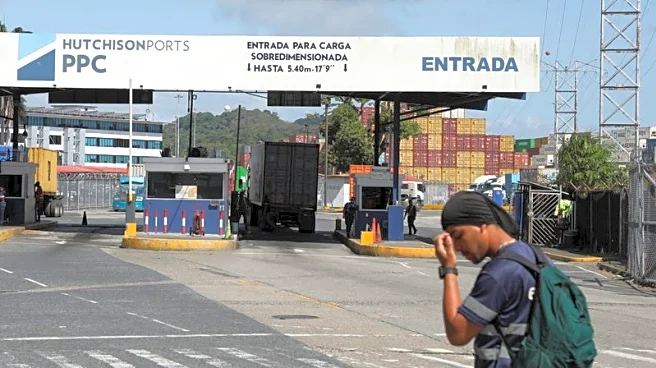
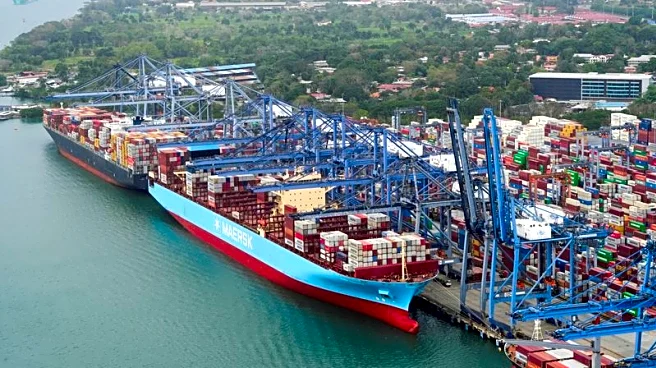
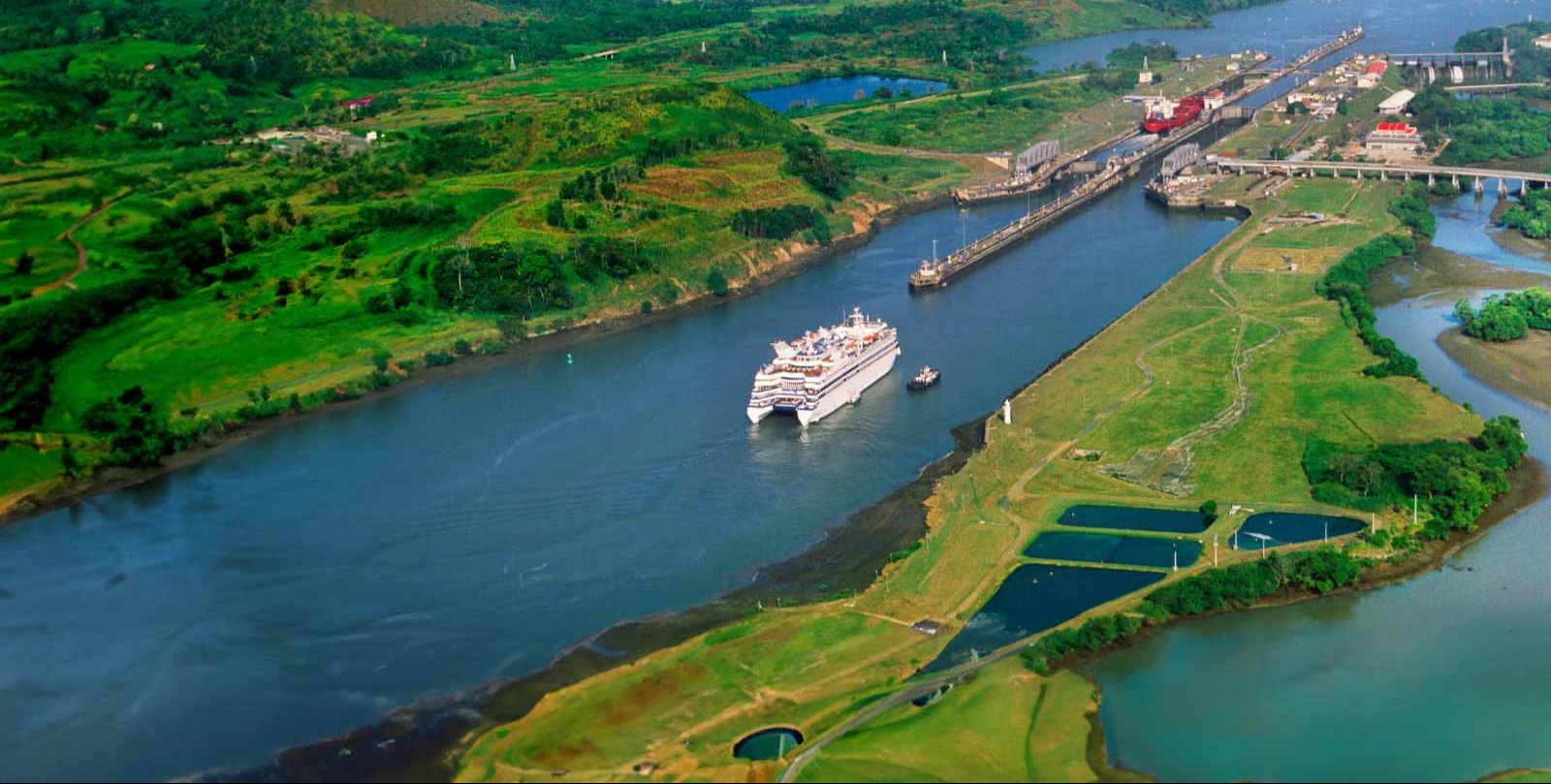
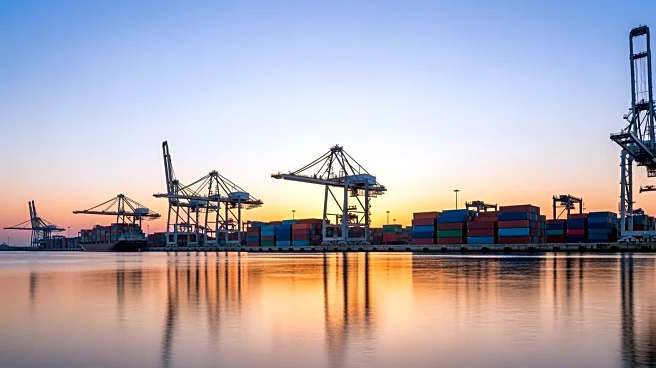
Panama's President José Raúl Mulino has assured that the critical ports at both ends of the Panama Canal will remain operational despite a recent Supreme Court ruling that declared the concession held
by a subsidiary of Hong Kong's CK Hutchison Holdings unconstitutional. The court's decision aligns with U.S. efforts to limit Chinese influence over the strategic waterway. Until the ruling is executed, Panama's Maritime Authority will collaborate with the Panama Ports Company to ensure uninterrupted operations. Once the concession is formally ended, a local subsidiary of Danish logistics company A.P. Moller-Maersk will manage the ports during a transitional phase until a new concession is awarded. The court's decision followed an audit revealing irregularities in the 25-year extension of the concession granted in 2021.
Why It's Important?
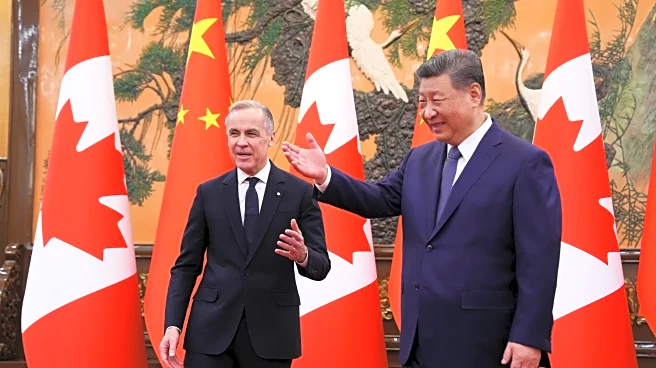
The ruling is significant as it reflects ongoing geopolitical tensions between the U.S. and China, particularly concerning strategic assets like the Panama Canal. The U.S. views the operation of these ports as a national security issue, with President Trump previously suggesting that Panama should return the canal to U.S. control. The decision could impact Hong Kong's business interests and highlights the challenges faced by companies navigating between U.S. and Chinese geopolitical interests. The ruling also underscores the importance of legal and contractual integrity in international business operations, as highlighted by the Hong Kong government's response.
What's Next?
The next steps involve the Panama Maritime Authority managing the transition of port operations to a new concession holder. The ruling may lead to legal challenges from CK Hutchison Holdings, which has expressed its intent to pursue legal action. The situation could also influence future investments by Hong Kong enterprises in Panama, as advised by the Hong Kong government. Additionally, the decision may prompt further diplomatic discussions between Panama, the U.S., and China regarding the management and control of the canal.
Beyond the Headlines
The court's ruling may have broader implications for international trade and logistics, given the Panama Canal's role as a critical global shipping route. The decision could also affect Panama's economic relations with China and the U.S., potentially influencing future foreign investments and trade agreements. The situation highlights the complex interplay between national sovereignty, international business interests, and geopolitical strategies.