



What's Happening?
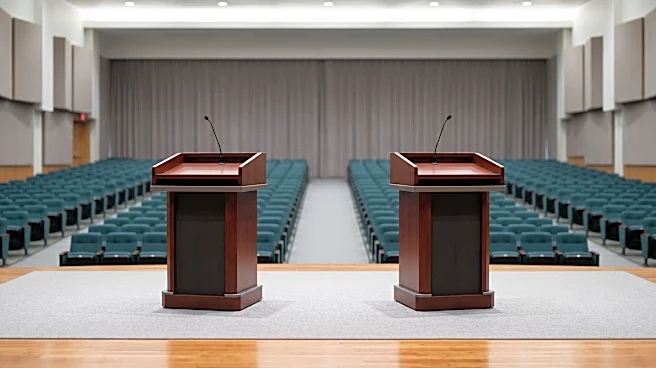
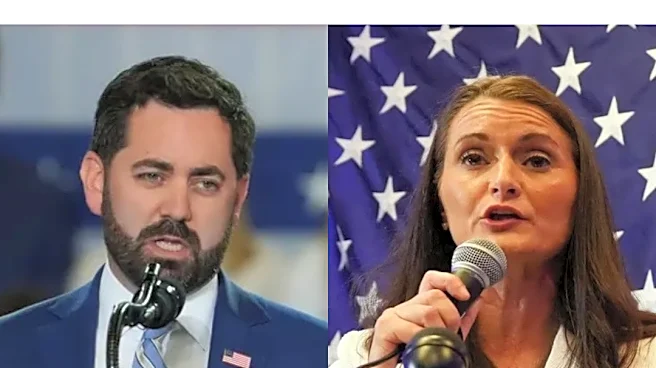
The campaign for Sarah Trone Garriott, a candidate for Iowa's 3rd Congressional District, has issued a statement regarding the status of a proposed debate with incumbent Republican Representative Zach Nunn. According to Trone Garriott's campaign manager,
Zach Schenkman, their campaign agreed to a debate and offered multiple October dates to KCCI, the proposed host. However, Schenkman claims that Zach Nunn's campaign refused to agree to any of the suggested dates. Trone Garriott expressed disappointment, stating that Nunn is resorting to "social media stunts instead of negotiating in good faith." She emphasized her commitment to listening to constituents, citing her record of holding open town halls in all 21 counties of the district, a practice she alleges Nunn has not followed during his nearly four years in Congress. The dispute centers on the scheduling of a debate that KCCI typically hosts before elections.
Why It's Important?
This development is significant for the voters of Iowa's 3rd Congressional District as it impacts their opportunity to hear both candidates discuss critical issues head-on in a public forum. Debates are a cornerstone of democratic elections, providing a direct comparison of candidates' platforms, policy stances, and leadership styles. A refusal to debate, or a disagreement over scheduling, can deprive voters of valuable information needed to make informed decisions. For the Trone Garriott campaign, this situation allows them to frame Nunn as unwilling to engage with voters and accountable for his actions, potentially swaying undecided voters. Conversely, Nunn's campaign might be employing a strategy to limit direct engagement, perhaps relying on other forms of outreach or a perceived advantage as the incumbent. The outcome of this debate dispute could influence voter perception of transparency and accessibility for both candidates.
What's Next?
The immediate next steps will likely involve continued public statements from both campaigns regarding the debate. The Trone Garriott campaign will likely press Nunn to agree to a debate, potentially offering new dates or formats. KCCI, as the proposed host, may also issue a statement or attempt to mediate a resolution between the campaigns to facilitate a debate. Voters in Iowa's 3rd District will be watching closely to see if a debate ultimately materializes and how each campaign handles the ongoing disagreement. The absence of a debate could lead to increased reliance on campaign advertisements, social media, and individual appearances for voters to gather information, potentially altering the dynamics of the race. The campaigns will continue their efforts to reach voters through other means, but the debate issue will remain a talking point.
Beyond the Headlines
This situation highlights a broader trend in modern political campaigns where debates, once a guaranteed feature, are increasingly subject to strategic negotiation and sometimes avoidance. The decision by an incumbent to decline debate dates can be a calculated move to protect a lead or avoid potential missteps, while challengers often push for more debates to gain exposure and challenge the incumbent directly. This dynamic raises questions about the role of traditional media in facilitating voter education and the evolving nature of political discourse. If debates become less frequent or more difficult to arrange, it could further fragment the information landscape, making it harder for voters to compare candidates comprehensively. It also underscores the importance of candidate accessibility and transparency, particularly for those seeking to represent constituents at the federal level.