


What's Happening?
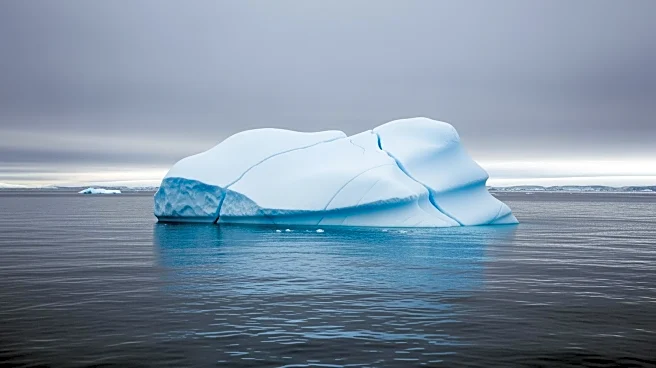
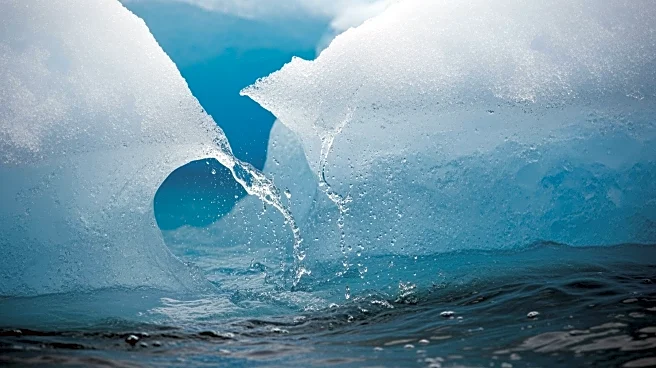
Researchers from Rutgers University have discovered that meltwater from Antarctic glaciers contributes significantly less iron to the Southern Ocean than previously thought. This finding challenges the widely held belief that glacial melting under ice
shelves releases substantial amounts of bioavailable iron, which is crucial for the growth of phytoplankton. Phytoplankton play a vital role in absorbing carbon dioxide, thus acting as a significant carbon sink. The study, published in Communications Earth and Environment, involved precise measurements of iron flow from the Dotson Ice Shelf in the Amundsen Sea. The research team found that only about 10% of the dissolved iron in the water came from meltwater, with the majority originating from deep ocean water and continental shelf sediments.
Why It's Important?
The study's findings have significant implications for climate change models and forecasts. The Southern Ocean is a critical region for carbon dioxide absorption due to its abundant phytoplankton, which rely on iron for growth. The assumption that glacial meltwater is a major source of this iron has influenced climate models and predictions. By revealing that most iron comes from deep ocean water and sediments, the study suggests that current models may need revision. This could affect our understanding of the Southern Ocean's role in global carbon cycles and climate regulation. The research highlights the need for more direct field measurements to accurately assess the sources and impacts of iron in these waters.
What's Next?
The researchers emphasize the need for further studies to understand the processes influencing iron release in the Southern Ocean. Future research could focus on the subglacial processes that contribute to iron release, particularly the role of bedrock dissolution in the presence of a liquid meltwater layer. These insights could lead to more accurate climate models and a better understanding of the Southern Ocean's ecological dynamics. Additionally, the findings may prompt a reevaluation of strategies aimed at enhancing carbon sequestration in oceanic regions through iron fertilization.