


What's Happening?
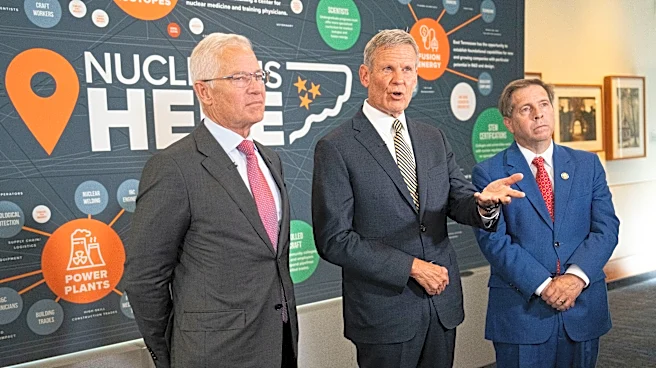
Several Republican-led states, including Utah, Tennessee, and Oklahoma, are exploring the possibility of hosting facilities for the full nuclear fuel cycle, including waste disposal, as part of the Department of Energy's Nuclear Lifecycle Innovation Campuses
initiative. This move is seen as a potential economic boon, with promises of significant investment and job creation. However, it also involves the political risk of managing nuclear waste, a contentious issue historically opposed by states like Nevada, where Senators Jacky Rosen and Catherine Cortez Masto continue to legislate against using Yucca Mountain as a nuclear waste repository.
Why It's Important?
The willingness of some states to consider hosting nuclear waste facilities marks a shift in the political landscape surrounding nuclear energy. This development could lead to significant economic benefits, such as job creation and investment in advanced nuclear industries. However, it also raises concerns about the long-term environmental and safety implications of nuclear waste disposal. The outcome of these initiatives could influence national energy policy and the future of nuclear energy in the U.S.
What's Next?
The Department of Energy will continue discussions with interested states to finalize agreements and plans for the Nuclear Lifecycle Innovation Campuses. The political and public response to these proposals will be crucial in determining their viability. States considering participation will need to weigh the economic benefits against potential environmental and political risks. The ongoing debate over nuclear waste management will likely continue to be a contentious issue in U.S. energy policy.