




What's Happening?
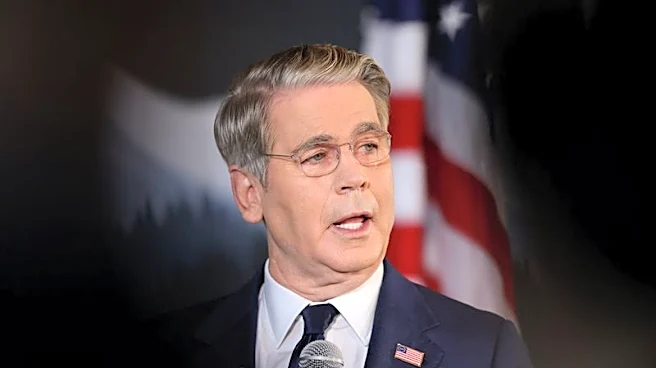
During a recent town hall on August 31, Republican U.S. Rep. Tony Wied expressed broad support for President Trump’s policies, while also addressing various national issues, particularly those related to cost-of-living concerns. Wied responded to a caller's
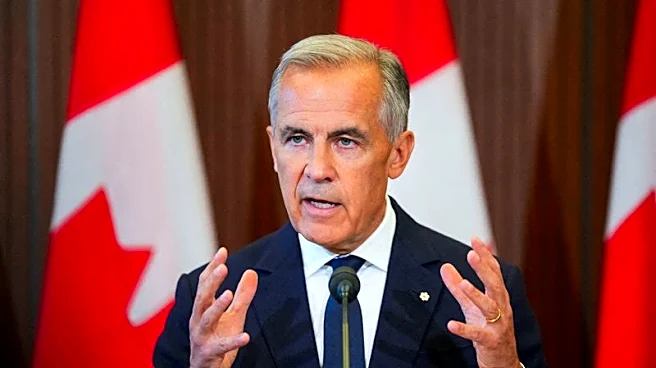
concerns about tariffs on Canadian products, acknowledging that they were raising costs for small businesses. He stated that he had brought similar concerns to the White House, but maintained that tariffs are part of a larger strategy to reduce the U.S. trade deficit and encourage other countries to purchase American goods. Wied also voiced his belief that the Iran War should end, despite its initial intentions regarding nuclear threats, to refocus on domestic issues. Furthermore, he lamented the U.S. departure from the gold standard, asserting that its reintroduction is necessary to combat inflation and address the national debt, which he identified as the country's most significant issue.
Why It's Important?
Rep. Wied's stance on tariffs, the gold standard, and foreign policy carries significant implications for U.S. economic and political landscapes. His support for tariffs, despite acknowledging their impact on small businesses, indicates a continued push towards protectionist trade policies aimed at rebalancing trade deficits. This approach could lead to ongoing trade disputes and potentially higher costs for consumers and businesses, as seen with the Canadian tariffs. His advocacy for a return to the gold standard, a concept largely abandoned by modern economies, suggests a desire for a more rigid monetary policy, which could drastically alter the Federal Reserve's ability to manage inflation and economic growth. Additionally, his call to end the Iran War reflects a potential shift in foreign policy priorities, emphasizing domestic concerns over international military engagements. These positions highlight a broader ideological debate within the Republican party regarding economic sovereignty, monetary policy, and the scope of U.S. involvement in global conflicts.
What's Next?
The ongoing trade talks with Canada, which had previously stalled, are expected to resume, potentially leading to renegotiations of the tariffs that Rep. Wied discussed. The outcome of these discussions will directly impact U.S. businesses and consumers affected by the increased costs of Canadian products. Rep. Wied's continued emphasis on the national debt and the gold standard suggests that these issues will likely remain central to his legislative agenda and public discourse. His re-election campaign for the 8th Congressional District will provide a platform for these discussions, with his Democratic challenger, Rick Crosson, already criticizing Wied's economic policies. The debate over the gold standard, while not immediately actionable, could spark further discussions among policymakers and economists about alternative monetary frameworks. The future of U.S. foreign policy regarding the Iran War will depend on broader governmental decisions, but Wied's comments indicate a growing sentiment for re-evaluating military commitments abroad.
Beyond the Headlines
Rep. Wied's remarks delve into fundamental questions about the U.S. economic system and its global role. His advocacy for the gold standard touches upon a long-standing debate about the nature of currency and inflation, raising ethical and philosophical questions about government control over monetary policy versus market-driven value. The argument that the lack of a gold standard contributes to inflation suggests a distrust in contemporary economic management and a desire for a return to historical financial principles. Furthermore, his position on tariffs, while framed as a means to achieve fair trade, also highlights the complex ethical considerations of protectionism, balancing domestic industry support against the potential for higher consumer prices and international trade friction. The call to end the Iran War, shifting focus to domestic issues, reflects a broader sentiment of isolationism or a re-prioritization of national interests, which could have profound implications for U.S. alliances and global stability. These discussions underscore deeper ideological currents shaping American policy.