
What's Happening?
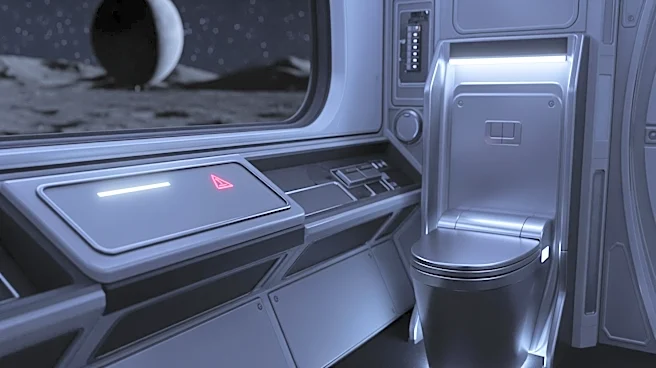
The Artemis II mission, NASA's first crewed lunar flyby in over 50 years, is currently facing a technical issue with its onboard toilet system. The mission, which includes three American astronauts and
one Canadian, is set to break the distance record held by Apollo 13 as it travels over 252,000 miles from Earth. However, the crew has encountered a malfunction with the Orion capsule's toilet, which has been inconsistent since the mission's launch. Engineers suspect that ice may be blocking the line, preventing proper flushing. Despite the issue, the toilet remains functional for solid waste, and the astronauts have been instructed to use backup urine collection bags. The mission is a significant step in NASA's plans for a sustainable moon base, with a lunar landing targeted for 2028.
Why It's Important?
The Artemis II mission is crucial for NASA's long-term lunar exploration goals, marking a significant milestone in human spaceflight. The mission's success is vital for establishing a sustainable presence on the moon, which could pave the way for future crewed missions to Mars. The technical challenges faced, such as the toilet malfunction, highlight the complexities of space travel and the need for robust systems to support human life in space. The mission also underscores international collaboration in space exploration, with Canadian astronaut Jeremy Hansen making history as the first non-U.S. citizen to fly to the moon. The mission's outcome could influence future funding and international partnerships in space exploration.
What's Next?
The Artemis II mission is expected to complete its lunar flyby and return to Earth with a Pacific Ocean splashdown scheduled for April 10. NASA will likely conduct a thorough review of the mission's technical issues, including the toilet malfunction, to improve future missions. The insights gained from Artemis II will inform the development of the Artemis III mission, which aims to land astronauts on the lunar surface by 2028. The mission's success could bolster public and governmental support for NASA's lunar exploration initiatives, potentially accelerating the timeline for establishing a permanent lunar base.