


What's Happening?
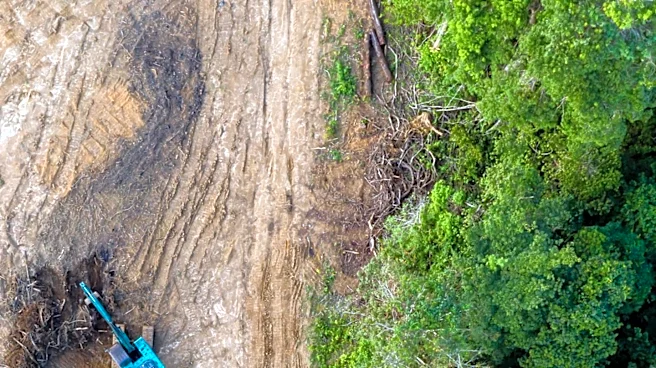
Recent satellite data suggests an increase in deforestation within the Brazilian Amazon. This development is part of a broader trend of rising Amazon deforestation, which has been linked to various factors including agricultural expansion and illegal
logging. The situation is particularly concerning given the ecological importance of the Amazon rainforest. Reports also highlight the vulnerability of Brazil’s Roraima state to wildfires, exacerbated by a reduction in federal funding. Furthermore, infrastructure projects in the Amazon are reportedly putting 68% of indigenous lands and protected areas at risk. These issues collectively point to growing pressures on the Amazon ecosystem and its inhabitants.
Why It's Important?
The increase in Amazon deforestation has significant global implications, particularly concerning climate change and biodiversity. The Amazon rainforest acts as a crucial carbon sink, and its destruction releases stored carbon dioxide, contributing to global warming. For the U.S., this could mean intensified efforts in international climate diplomacy and potential pressure to support conservation initiatives. The loss of biodiversity in the Amazon also impacts global ecosystems, potentially leading to the extinction of countless species. Economically, the U.S. and other nations may face challenges related to the supply chains of products linked to deforestation, such as beef and soy. The displacement and endangerment of indigenous communities due to deforestation and infrastructure projects also raise human rights concerns, which could influence U.S. foreign policy and humanitarian aid efforts.
What's Next?
In response to the rising deforestation, there is an anticipated increase in calls for stronger international cooperation and funding for Amazon conservation efforts. Environmental organizations and indigenous groups are expected to intensify their advocacy for stricter environmental regulations and the protection of indigenous lands. Brazil's government may face renewed international scrutiny and pressure to address the issue, potentially leading to policy changes regarding land use and resource management in the Amazon. The U.S. and other developed nations might explore new diplomatic strategies or economic incentives to encourage sustainable practices in the region. Additionally, there could be a push for more transparent monitoring and reporting of deforestation rates to hold responsible parties accountable.
Beyond the Headlines
Beyond the immediate environmental and political concerns, the escalating deforestation in the Amazon highlights a deeper conflict between economic development and ecological preservation. The drive for agricultural expansion and resource extraction often prioritizes short-term economic gains over long-term environmental sustainability. This situation also underscores the complex interplay of global demand for commodities, local economic pressures, and governance challenges in protecting vast natural resources. The impact on indigenous communities, who are often the frontline defenders of the forest, raises ethical questions about land rights and cultural preservation. The long-term shifts could include irreversible ecological damage, further exacerbating global climate challenges and potentially leading to new forms of environmental migration and resource conflicts.