



What's Happening?
Senator Mike Crapo (R-ID) has sponsored the Bring Our Heroes Home Act (S. 3226), a bill that aims to centralize federal records concerning missing military personnel and civilians. The legislation mandates federal agencies to identify, preserve, and transfer
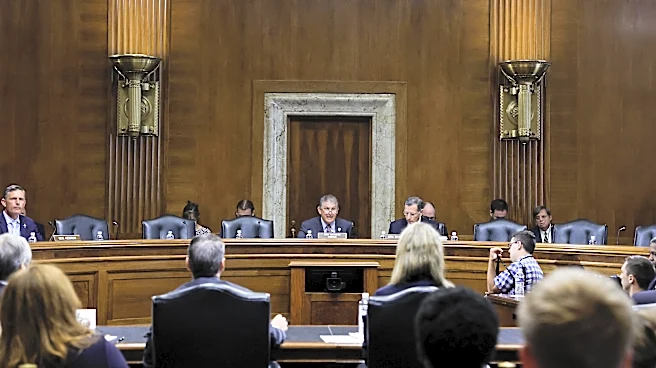
these records to the National Archives, thereby creating a single, accessible collection for families and researchers. This collection would cover missing-personnel cases, including prisoners of war and those missing in action, dating back to December 7, 1941. Agencies would be required to review and transfer relevant records within specific deadlines, with a five-member Review Board established to oversee disclosure rules, issue subpoenas, and manage classified material. The Senate Homeland Security and Governmental Affairs Committee unanimously approved the bill by voice vote during an August 6 business meeting. The bill has garnered bipartisan support with 14 cosponsors, including 11 Democrats, two Republicans, and one independent. A companion bill, H.R. 6723, has been introduced in the House.
Why It's Important?
This legislation is crucial for providing closure to families of missing service members and civilians, some of whom have waited decades for information. Senator Crapo emphasized that the bill seeks to eliminate bureaucratic hurdles that have historically prevented families from accessing vital records. By centralizing these records, the act streamlines the search process, making it more efficient for both families and researchers to uncover information about unresolved cases. The bipartisan support for the bill underscores the widespread recognition of the need to address this long-standing issue. The establishment of a Review Board with subpoena power and authority over classified material ensures a thorough and comprehensive approach to record disclosure, balancing national security concerns with the public's right to information. This initiative reflects a commitment to honoring those who served and providing their loved ones with the answers they seek.
What's Next?
Following its unanimous approval by the Senate Homeland Security and Governmental Affairs Committee, the Bring Our Heroes Home Act (S. 3226) is now positioned to advance further through the legislative process. An earlier version of the bill, S. 2315, reached the Senate calendar in December 2024 during the previous Congress, indicating a sustained effort to pass this legislation. The existence of a House companion bill, H.R. 6723, suggests a coordinated push for its enactment. The next steps will likely involve a full Senate vote, and if passed, reconciliation with the House version before it can be sent to the President for signature. The specified deadlines for agencies to identify, review, and transfer records, along with the establishment of the Review Board, indicate that once enacted, the implementation phase will involve significant inter-agency coordination and resource allocation to fulfill the bill's objectives.
Beyond the Headlines
Beyond its immediate impact on families, the Bring Our Heroes Home Act could set a precedent for greater transparency and accountability within federal agencies regarding historical records. The creation of a centralized collection and a dedicated Review Board highlights a shift towards prioritizing public access to information, even when dealing with sensitive military and intelligence files. This initiative could foster a more proactive approach to declassification and information sharing, potentially influencing how other historical government records are managed and made accessible. Furthermore, the bipartisan nature of this bill in a politically divided climate underscores the enduring national commitment to military families and the collective memory of those who served. It also raises broader questions about the ethical responsibilities of government to provide closure and information to its citizens, particularly in cases involving national service and sacrifice.