






What's Happening?
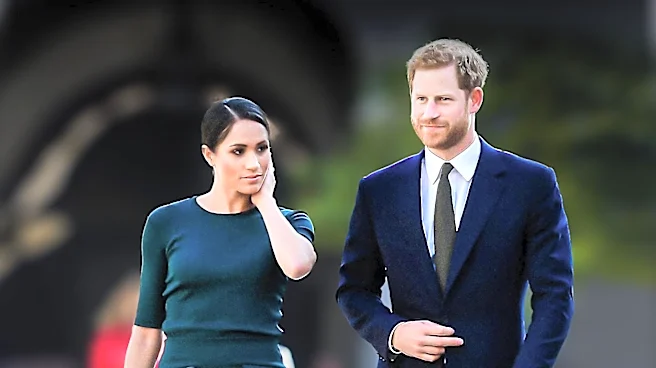
Mandana Dayani, the former president of Archewell, the organization founded by Meghan Markle and Prince Harry, has publicly praised their decision to step away from the British monarchy, describing it as 'really brave.' Dayani, who served as Archewell's
president from 2021 until late 2022, stated that the couple's willingness to challenge the institution and openly question whether life within it worked for them was a significant factor in her decision to join their team. She expressed deep respect for their courage in making such a difficult choice. Despite her departure from Archewell, Dayani maintains a strong relationship with the couple, indicating no major falling-out. Her comments highlight an external perspective on the couple's controversial move, framing it as an act of defiance and self-determination rather than a retreat.
Why It's Important?
This endorsement from a former senior executive provides a unique and positive perspective on Meghan Markle and Prince Harry's departure from royal duties, particularly within the U.S. context where their Archewell organization operates. Dayani's remarks could influence public opinion in the U.S., potentially bolstering the couple's image as independent and principled individuals who prioritized their well-being and values over institutional expectations. For their commercial and charitable interests in the U.S., this positive framing from a respected business professional could enhance their credibility and appeal to potential partners and donors. It also underscores the cultural difference in how such decisions are perceived; while the move was met with controversy in the UK, it is seen by some in the U.S. as a courageous act of self-empowerment. This narrative could be particularly impactful for their philanthropic endeavors and media projects, which often focus on themes of mental health, social justice, and personal agency.
What's Next?
Dayani's public support may encourage further positive commentary from individuals who have worked with Meghan Markle and Prince Harry, potentially shaping the public narrative around their post-royal careers. This could lead to increased interest and support for their Archewell initiatives, both charitable and commercial, in the U.S. The couple may leverage such endorsements to further solidify their brand and mission, emphasizing their commitment to causes they believe in. Conversely, this positive framing might also intensify the ongoing debate surrounding their departure from the monarchy, potentially drawing further reactions from Buckingham Palace or royal commentators. The focus will likely remain on how the couple continues to define and execute their roles as private citizens with significant public platforms, particularly in their U.S.-based operations and media engagements.
Beyond the Headlines
Dayani's comments delve into the deeper implications of personal agency and institutional challenge. Her perspective highlights the ethical dimension of individuals choosing to prioritize their personal values and well-being, even when it means diverging from long-standing traditions and powerful institutions. This narrative resonates strongly in a society that often values individualism and the courage to challenge the status quo. It also touches upon the cultural shift where public figures are increasingly expected to be authentic and align their actions with their stated values. The 'brave' label applied to their decision suggests a broader commentary on the pressures faced by individuals within highly structured environments and the psychological toll of conforming to expectations that do not align with one's personal truth. This could inspire discussions about mental health, personal boundaries, and the right to self-determination, even for those in the most public of roles.