



What's Happening?
Sixteen environmental and public health groups have filed a legal petition with the U.S. Environmental Protection Agency (EPA), urging the agency to significantly lower the Maximum Contaminant Level (MCL) for nitrate in drinking water. The petition calls
for the MCL to be reduced from the current 10 milligrams per liter (mg/L) to 1 mg/L, and for the Maximum Contaminant Level Goal (MCLG) to be set at 0 mg/L, acknowledging that no amount of nitrate is safe for human health over a lifetime. The groups, including Food & Water Watch, Environmental Working Group, and Natural Resources Defense Council, argue that current nitrate levels pose an "urgent threat to public health," citing scientific research linking even low levels of nitrate exposure to increased risks of certain cancers and other adverse health effects. They also highlight that surface water nitrate levels are increasing while monitoring is decreasing.
Why It's Important?
This petition underscores a critical public health concern in the U.S., as an estimated 120 million people served by public water systems are exposed to nitrate levels that the groups deem unsafe based on current science. The current federal standard, set decades ago, primarily aimed to prevent methemoglobinemia (blue baby syndrome), but newer research indicates broader health risks, including various cancers. If the EPA were to adopt the proposed stricter standards, it would necessitate significant changes for water utilities and agricultural practices across the country. While the groups argue that a lower MCL is technically achievable and economically justified, with estimated net health benefits of approximately $269.7 billion over 50 years, water utilities could face substantial costs for treatment if the sources of contamination are not addressed. This issue highlights the tension between public health protection, environmental regulation, and the economic impacts on industries like agriculture.
What's Next?
The legal petition requires a response from the EPA, which could potentially lead to further legal actions. The EPA has stated it will review the petition and is committed to ensuring access to clean drinking water, but noted that its most recent review in July 2024 found no need to revise the MCL for nitrate. The agency indicated it would consider new studies for its next review. The petitioners are also advocating for the federal government to provide financial support to utilities to help them comply with a lowered standard, arguing that communities should not bear the full costs of reducing nitrate contamination driven by underregulated industrial agriculture. This situation sets the stage for a potential regulatory battle, with significant implications for public health, agricultural practices, and water infrastructure funding in the U.S.
Beyond the Headlines
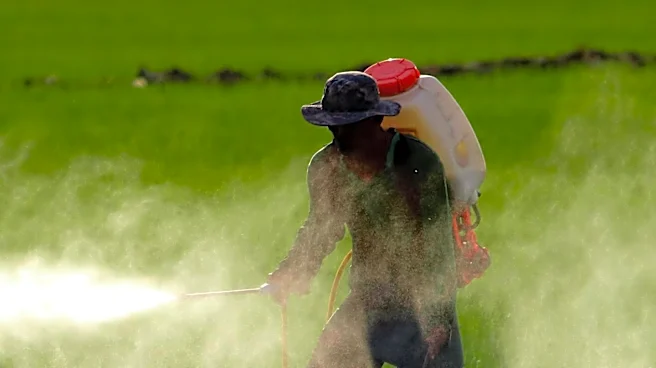
The debate over nitrate contamination extends beyond immediate health risks to broader issues of agricultural policy and environmental stewardship. The petition directly links nitrate pollution to excessive application of synthetic fertilizers and animal waste from concentrated animal feeding operations (CAFOs), inadequately treated sewage, and failed septic systems. This points to a systemic challenge in managing agricultural runoff and wastewater, which are major contributors to water quality degradation. The call for stricter regulations on nitrate pollution also highlights the interconnectedness of human health, ecosystem health, and the well-being of endangered species. The outcome of this petition could influence future policies on sustainable agriculture, water treatment technologies, and the allocation of resources for environmental protection, potentially leading to long-term shifts in how the U.S. addresses diffuse pollution sources.