

What's Happening?
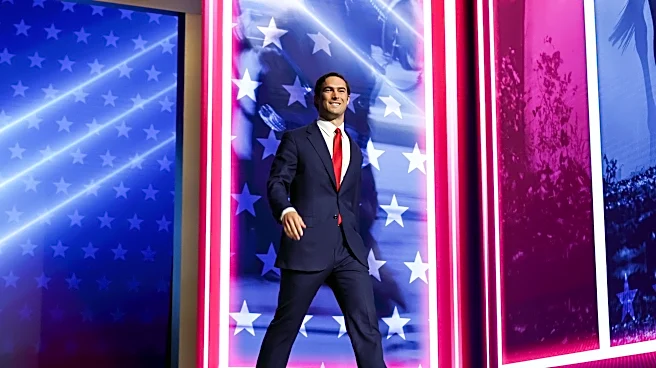
Democrat congressional candidate Bobby Pulido, who is challenging Republican U.S. Representative Monica De La Cruz in November, is facing scrutiny over a 1998 interview where he stated he was 'allergic to horses' and that 'cowboy hats weren’t part of
his personality.' This resurfaced interview contrasts sharply with his current campaign imagery, which prominently features cowboy hats and horseback riding. Pulido's campaign has dismissed the comments as decades-old, pointing to childhood photos of him in cowboy attire to assert his connection to 'vaquero culture.' The campaign spokesperson for Pulido stated that Representative De La Cruz's campaign is in 'freefall' and that the unearthed quote is the best they have. This is not the first time Pulido's campaign imagery has been questioned; a previous ad featuring South Texas imagery included stock footage of a German reining champion, which his campaign confirmed was purchased stock footage.
Why It's Important?
This development is important as it highlights the challenges candidates face in maintaining a consistent public image, especially when past statements conflict with current campaign branding. For Bobby Pulido, the discrepancy between his past remarks and his present 'cowboy' persona could impact voter perception, particularly in a district where cultural authenticity and connection to local traditions might be valued. The Republican U.S. Representative Monica De La Cruz's campaign is leveraging these unearthed comments, suggesting that such inconsistencies could be a point of attack in a competitive election. This situation underscores the intense scrutiny political candidates undergo, where even decades-old comments can become relevant in modern campaigns, potentially influencing voter trust and the narrative surrounding a candidate's authenticity.
What's Next?
As the November election approaches, it is likely that Representative De La Cruz's campaign will continue to highlight these inconsistencies in Bobby Pulido's public image. Pulido's campaign will likely maintain its defense, emphasizing his childhood connection to 'vaquero culture' and dismissing the 1998 comments as irrelevant to his current political platform. The media and voters in Texas' 15th Congressional District will continue to evaluate both candidates, with the issue of authenticity potentially playing a role in how constituents perceive their choices. This situation could lead to further debates or public statements from both campaigns as they vie for voter support, particularly in a district that is expected to be a tough election for Representative De La Cruz.
Beyond the Headlines
The surfacing of Bobby Pulido's past comments on his 'cowboy' image delves into broader themes of political branding and the construction of identity in public life. In an era where personal narratives are meticulously crafted for political advantage, any perceived inauthenticity can be damaging. This incident raises questions about the extent to which a candidate's past self should be held against their present political persona, and how much evolution in personal expression is acceptable to the electorate. It also highlights the role of media and opposition campaigns in unearthing and amplifying such discrepancies, turning them into significant campaign issues. The cultural resonance of the 'cowboy' image in Texas further complicates this, as it touches upon deeply ingrained regional identities and values, making the debate about authenticity particularly potent.