






What's Happening?
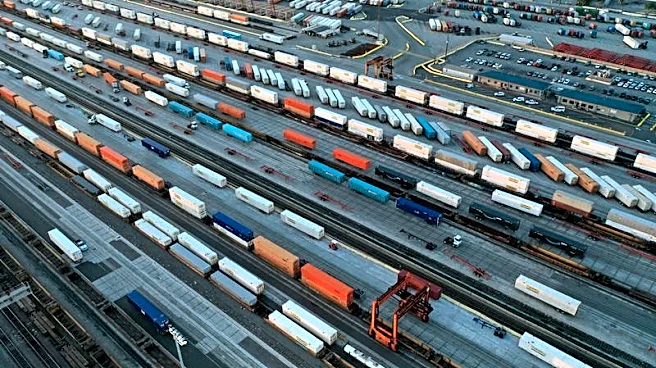
U.S. freight rail networks are experiencing a significant surge in thefts, with criminals stealing over $200 million worth of goods from 75,000 incidents in 2025. This represents a quadrupling of theft levels compared to before 2020. The increase is largely
attributed to criminal gangs, whose drug trade supply chains were disrupted during the pandemic, pivoting to cargo theft. These gangs target rail hubs in urban bottlenecks such as Chicago, Los Angeles, and Memphis. A recent incident in Memphis involved three men stealing over $20,000 in women's clothing, toys, and non-alcoholic chardonnay from CSX Corp. railcars. AI-powered cameras and a task force, including the Tennessee Bureau of Investigation and federal, state, and local agencies, led to the arrest of the perpetrators. The alleged thieves face felony burglary and theft charges, with one defendant potentially facing up to 15 years in prison due to the value of the stolen goods exceeding $10,000. The Shelby County District Attorney is preparing to seek a grand jury indictment.
Why It's Important?
The escalating rail thefts pose a substantial financial burden on U.S. freight carriers, who are generally liable for lost goods up to a certain amount. This directly impacts their bottom lines and can lead to increased costs for consumers and businesses. The shift in criminal activity from drug trafficking to cargo theft highlights a broader adaptation by organized crime, exploiting vulnerabilities in the supply chain. The targeting of high-value, easily resalable items like electronics, luxury clothing, and automobile tires indicates a sophisticated understanding of market demand for stolen goods, often facilitated through online marketplaces and independent dealers. The involvement of transnational criminal networks, as alleged in Arizona, suggests a wider organized crime problem that extends beyond local opportunists, potentially impacting national security and trade. The disruption to supply chains and the financial losses incurred can also deter investment in rail infrastructure and services, ultimately affecting the efficiency and reliability of the nation's freight transportation system.
What's Next?
In response to the rising thefts, major freight carriers like Union Pacific, BNSF, and CSX are investing millions of dollars in advanced security measures. These include monitoring technology, drones with thermal imaging, AI-enhanced cameras, barbed-wire fencing, and masonry walls. CSX, for instance, has spent over $7.5 million on fortifications at its Leewood Yard depot in Memphis, resulting in an 80% drop in rail thefts in the region year-on-year. Railroads are also collaborating with local police, the FBI, and corporate security teams. The House of Representatives passed the Combating Organized Retail Crime Act with bipartisan support, which aims to provide law enforcement with stronger legal tools, including criminal forfeiture of stolen goods and expanded money-laundering statutes. The bill also proposes a group within the Department of Homeland Security to coordinate law enforcement efforts. Its passage in the Senate is anticipated, with bipartisan backing. Criminal gangs are adapting their tactics, using walkie-talkies instead of mobile phones and targeting trains in remote areas or by leaping onto moving trains from bridges.
Beyond the Headlines
The modern wave of train robberies, while reminiscent of 19th-century outlaw activities, reveals a contemporary challenge driven by economic shifts and criminal adaptability. The pandemic's disruption of traditional criminal enterprises, particularly the drug trade, inadvertently redirected focus towards cargo theft, highlighting the interconnectedness of various illicit economies. The relatively minor penalties for simple theft, especially in cities prioritizing violent crime, create a perceived low-risk, high-reward environment for these gangs. This underscores a systemic issue in the justice system's ability to effectively deter and prosecute property crimes on a large scale. The use of advanced technology by both criminals (e.g., studying train schedules) and law enforcement (AI cameras, drones) signifies an ongoing technological arms race in crime prevention. Furthermore, the alleged involvement of transnational gangs, some forcing trafficking victims to participate in heists, exposes a darker, more complex human exploitation dimension to these seemingly straightforward property crimes, linking them to broader issues of human trafficking and organized crime.