





What's Happening?
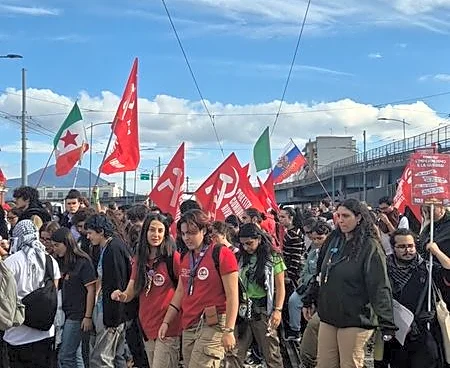
Dockworkers across Europe and other regions, including North America, are participating in an international campaign of strikes and protests. This movement, organized by unions in countries such as France, Italy, Greece, Spain, Turkey, and Morocco, aims
to denounce arms shipments, particularly in the context of the Middle East conflicts, and to demand better working conditions. The unions issued a joint statement calling for an end to wars and the 'militarization of ports,' asserting that 'Ports must not be used for the transport of weapons, ammunition, military equipment and troops.' Organizers claim over 100 ports are involved, with actions ranging from full-day strikes to shorter walkouts and demonstrations. While the full extent of the disruption is still unfolding, supply chain management company C.H. Robinson has advised clients of potential operational disruptions and shipment delays.
Why It's Important?
This international dockworker action highlights the growing intersection of labor activism, geopolitical concerns, and global supply chain vulnerabilities. While experts anticipate a limited material disruption to global trade flows from a single day of strikes, the movement adds another layer of complexity to supply chains already strained by geopolitical tensions, climate-related events, and shifting tariff regimes. For the U.S., any significant or prolonged disruption at North American ports, as mentioned by organizers, could impact the flow of goods, potentially affecting various industries reliant on international trade. Perishable goods and time-sensitive shipments are particularly vulnerable to even short-term delays, which could lead to economic losses for businesses and consumers.
What's Next?
The immediate impact of these strikes is expected to vary by port, terminal, and local participation levels. While a 24-hour strike is unlikely to cause widespread shortages, it could exacerbate existing congestion at ports already experiencing delays, such as Genoa. The long-term implications depend on whether these protests escalate in frequency or duration, potentially leading to more significant disruptions in global trade. The movement also signals a growing willingness among international labor groups to use their leverage to influence geopolitical issues and advocate for improved labor standards, which could inspire similar actions in other sectors or regions. Businesses and governments will likely monitor these developments closely to assess potential risks to supply chain stability.
Beyond the Headlines
The dockworkers' protests underscore a broader ethical and political debate regarding the role of labor in international conflicts and the moral implications of facilitating arms trade. By explicitly stating, 'Dockworkers do not work for war!', the unions are asserting a moral stance that transcends traditional labor disputes over wages and conditions. This movement could set a precedent for other labor groups to take similar stands on global issues, potentially leading to a re-evaluation of corporate and governmental responsibilities in international commerce. It also highlights the power of organized labor to influence global policy and supply chains, even in the face of complex geopolitical realities, raising questions about the balance between national security interests and humanitarian concerns.