






What's Happening?
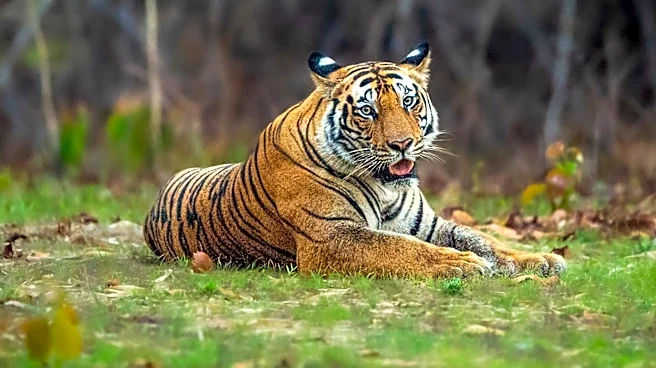
India has reported a significant increase in its tiger population, with conservation efforts now shifting towards protecting the pathways that allow these animals to roam freely. The Terai Arc, a key conservation area, has seen its tiger numbers triple
over the past two decades. This success is attributed to initiatives like Project Tiger, launched in 1973, which has expanded the number of tiger reserves from 9 to 58. However, challenges remain as tigers begin to disperse into human-dominated areas, raising concerns about habitat connectivity and human-wildlife conflict.
Why It's Important?
The rise in India's tiger population is a major conservation success, highlighting the effectiveness of dedicated wildlife protection efforts. However, as tigers move beyond protected areas, ensuring safe corridors for their movement becomes crucial to prevent genetic isolation and reduce human-wildlife conflicts. This situation underscores the need for integrated landscape management that balances conservation with development. The success of these efforts could serve as a model for other countries facing similar conservation challenges.