





What's Happening?
The Supreme Court has dismissed Florida's attempt to sue California and Washington state regarding the issuance of commercial driver licenses (CDLs) to immigrants who do not speak English and are not authorized to be in the United States. This legal action
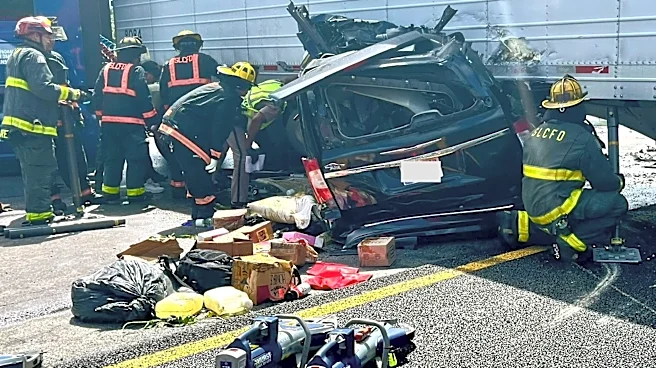
was initiated following a fatal crash in Florida involving Harjinder Singh, an Indian national with a valid CDL from California. Florida, led by Republicans, accused the Democratic-led Western states of defying federal immigration laws by issuing CDLs to non-citizens or non-legal permanent residents. The Supreme Court's decision not to hear the case was opposed by Justices Clarence Thomas and Samuel Alito, who argued that the court should address such original lawsuits between states.
Why It's Important?
This decision underscores the ongoing tension between state and federal authority over immigration and licensing laws. Florida's challenge highlights the broader national debate on states' rights to regulate immigrant participation in the workforce, particularly in industries like trucking that are vital to the economy. The Supreme Court's refusal to hear the case may embolden states like California and Washington to continue their current practices, potentially influencing other states to adopt similar policies. This could lead to further legal and political conflicts over state versus federal jurisdiction in immigration matters.
What's Next?
The Supreme Court's decision leaves the current state practices in place, but it may prompt further legislative or legal actions from states like Florida seeking to restrict immigrant access to certain professional licenses. The ruling could also lead to increased scrutiny of state policies on immigrant workforce participation, potentially influencing future federal immigration reform efforts. Stakeholders, including state governments, immigrant advocacy groups, and industry leaders, may respond with new strategies to address the implications of this decision.