









What's Happening?
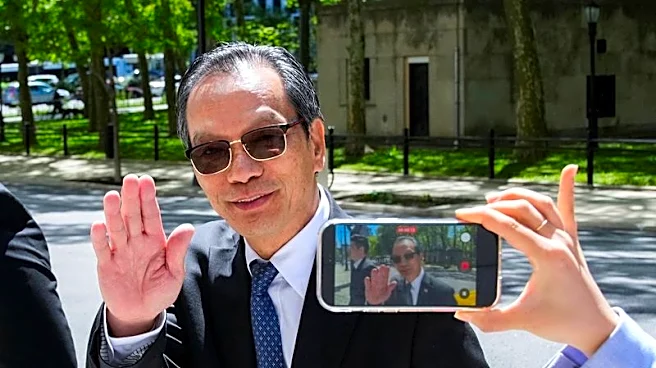
Lu Jianwang, a 64-year-old man, was convicted in New York City for acting as an illegal foreign agent and obstructing justice. He was accused of running a secret Chinese police station from an office in Manhattan's Chinatown. The U.S. prosecutors argued
that Lu deleted text messages containing orders from Beijing to silence and intimidate pro-democracy dissidents. Although acquitted of a related conspiracy charge, Lu faces up to 10 years in prison for acting as an illegal foreign agent and up to 20 years for obstruction of justice. The case highlights concerns over China's influence operations in the U.S., as the outpost was allegedly part of a global initiative by China's Ministry of Public Security to establish overseas police service stations.
Why It's Important?
This conviction underscores the growing tensions between the U.S. and China, particularly regarding espionage and influence operations. The presence of secret police stations in the U.S. raises significant national security concerns, as they are believed to be used for monitoring and potentially harassing individuals considered threats to Chinese interests. The case also reflects broader geopolitical struggles, as the U.S. and China compete over global influence, trade, and technology. The outcome of this case could influence U.S. policy and law enforcement strategies concerning foreign influence and espionage, potentially leading to stricter regulations and increased scrutiny of foreign entities operating within the U.S.
What's Next?
Lu Jianwang remains free on bail while awaiting sentencing, which has not yet been scheduled. His lawyer has indicated plans to appeal the conviction. The case may prompt further investigations into other suspected secret police stations and influence operations by foreign governments in the U.S. Additionally, it could lead to diplomatic discussions between the U.S. and China, as both nations navigate their complex relationship amid ongoing tensions. The U.S. government may also consider implementing new measures to prevent similar operations in the future, potentially affecting diplomatic and economic relations with China.