






What's Happening?
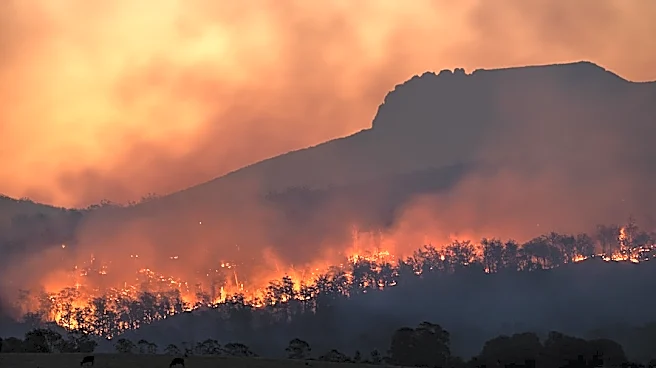
Colorado households may see a reduction in their Taxpayer's Bill of Rights (TABOR) refunds if Proposition 137 passes. This proposed ballot measure aims to reallocate sales tax revenue generated from outdoor recreation equipment towards wildfire prevention
and land conservation. A report from the Common Sense Institute (CSI) estimates that Proposition 137 would generate approximately $65 million in additional funding for wildfire mitigation and forest management. If approved, the measure is projected to bring in an extra $175 million in sales tax revenue from activities such as hunting, fishing, camping, cycling, boating, and recreational sports. Of this amount, $83 million would be dedicated to wildfire prevention and water protection, another $83 million to water and land conservation, $4.3 million to promoting economic development and workforce training in the outdoor recreation industry, and $4.3 million to increasing outdoor access for families and children. The revenue collected under Proposition 137 would be exempt from TABOR, leading to an estimated reduction in taxpayer refunds by up to $83 for single filers and $166 for joint filers in tax year 2029. Statewide, TABOR refunds could decrease by about one-third, from $521 million to roughly $346 million.
Why It's Important?
Proposition 137 represents a significant policy decision for Colorado, balancing increased funding for critical environmental initiatives against potential reductions in taxpayer refunds. The measure's ability to boost wildfire mitigation and forest management spending by nearly five times the current state level (from approximately $16.4 million to $83 million) is crucial given the state's recent history of intense wildfires and droughts. This increased funding could enhance Colorado's capacity to prevent and respond to wildfires, protecting communities, natural resources, and the tourism-based economy. However, the trade-off involves a direct financial impact on taxpayers through reduced TABOR refunds. This highlights a broader debate about how states fund essential services and environmental protection, especially in the context of climate change, and the willingness of citizens to contribute through altered tax structures. The measure also has implications for the outdoor recreation industry, with a portion of the funds allocated to its development and workforce training.
What's Next?
Colorado voters will decide on Proposition 137 in the upcoming November election. The outcome will determine whether the state adopts this new funding mechanism for wildfire mitigation and conservation. If passed, the measure will lead to a substantial increase in spending on these environmental programs and a corresponding decrease in TABOR refunds for taxpayers starting in tax year 2029. The coalition 'Vote Yes on Prop 137,' which includes environmental groups, outdoor recreation businesses, and prominent Colorado figures, will likely continue its efforts to garner public support. Conversely, those concerned about the reduction in TABOR refunds may voice opposition. The long-term effects of the proposition, if enacted, will be monitored to assess its impact on wildfire prevention effectiveness, land conservation efforts, and the state's overall fiscal landscape, particularly in conjunction with other TABOR-related tax measures on the ballot.
Beyond the Headlines
Proposition 137 delves into the complex interplay between environmental policy, fiscal responsibility, and public perception. The measure forces a direct confrontation with the costs associated with climate change adaptation and mitigation, specifically in the context of increasing wildfire risks. By linking outdoor recreation sales tax to conservation efforts, it attempts to create a self-sustaining funding model, but at the expense of taxpayer refunds. This raises ethical questions about who bears the financial burden of environmental protection and how public goods are prioritized. The debate around TABOR refunds, a unique aspect of Colorado's fiscal policy, adds another layer of complexity, as voters must weigh immediate financial returns against long-term environmental benefits. The outcome could set a precedent for how other states facing similar environmental challenges choose to fund their responses, potentially influencing future legislative approaches to climate resilience and resource management.