




What's Happening?
Colorado lawmakers from both Democratic and Republican parties are advocating for new regulations and safeguards for artificial intelligence (AI) technology. This bipartisan push is driven by growing public alarm over the rapid advancements and potential
catastrophic risks associated with AI. U.S. Rep. Brittany Pettersen (D-Lakewood) has called for stronger industry standards, including independent audits and mandatory incident reporting. Democratic U.S. Sen. John Hickenlooper, who frequently uses AI, has warned of a 'new and dangerous era' and co-introduced bipartisan legislation last year to develop standards for AI system construction and testing. He also urged the White House to address AI's risks. U.S. Rep. Jason Crow (D-Aurora) emphasized the need for protections concerning privacy and national security. On the Republican side, U.S. Rep. Gabe Evans (R-Fort Lupton) supports 'common sense guardrails' for consumers and led a bill passed by the House aimed at curbing AI data center costs. Evans also backs legislation promoting American-developed AI models while scrutinizing those from foreign adversaries. U.S. Rep. Jeff Crank (R-Colorado Springs) has placed the onus on AI companies to implement 'safety nets' in product development to protect the economy and national security. Despite this consensus on the need for guardrails, there is a divide on what these rules should entail and whether Congress can act quickly enough.
Why It's Important?
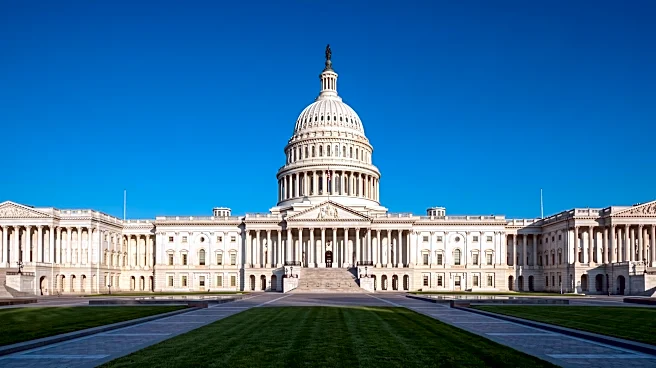
The bipartisan effort by Colorado lawmakers to regulate AI highlights a significant shift in how U.S. policymakers are approaching emerging technologies. The consensus across the political spectrum, from progressive Democrats to conservative Republicans, underscores the perceived urgency and widespread concern regarding AI's societal impact. This rare bipartisan opening in Congress could pave the way for federal legislation that establishes national standards for AI development and deployment. Such regulations could profoundly affect the U.S. technology industry, potentially increasing compliance costs for AI developers but also fostering greater public trust and adoption. For consumers, these safeguards could mean enhanced privacy protections and reduced risks from AI-driven systems. The debate over the nature of these rules—whether they should focus on industry standards, independent oversight, or national security—will shape the future landscape of AI innovation and its integration into daily life. The outcome could determine the U.S.'s competitive edge in AI globally, balancing innovation with ethical considerations and national security interests.
What's Next?
The immediate next steps involve continued legislative efforts and debates within Congress to define the scope and nature of AI regulation. Democratic U.S. Sen. Michael Bennet, while questioning Congress's speed, proposes creating an independent agency for AI rule-making and oversight, suggesting a potential path forward for comprehensive governance. The differing approaches, such as U.S. Rep. Gabe Evans's focus on promoting American AI while scrutinizing foreign models, indicate that future legislation may involve a multi-faceted strategy addressing both domestic innovation and international competition. Stakeholders, including AI companies, civil society groups, and privacy advocates, will likely intensify their lobbying efforts to influence the drafting of these regulations. The White House is also urged to confront the technology's risks, suggesting potential executive actions or directives in the absence of swift legislative progress. The ongoing discussions will likely center on balancing the need for innovation with robust safeguards, determining how to audit AI systems, enforce incident reporting, and protect national security without stifling technological advancement.
Beyond the Headlines
The push for AI safeguards by Colorado lawmakers reflects a deeper societal reckoning with the ethical and existential implications of advanced artificial intelligence. Beyond immediate regulatory concerns, this movement touches upon fundamental questions of control, accountability, and the future of human-technology interaction. The call for 'safety nets' and 'common sense guardrails' implicitly acknowledges the potential for AI to disrupt not only economic sectors but also democratic processes and individual freedoms. The debate over whether Congress can move fast enough to keep pace with technological advancements highlights a persistent challenge in governance: how to regulate rapidly evolving technologies without stifling innovation. The emphasis on scrutinizing foreign AI models also points to the geopolitical dimensions of AI, where technological leadership and ethical standards are intertwined with national security and international influence. This legislative momentum could set precedents for how the U.S. addresses future technological disruptions, shaping a framework that prioritizes human well-being and societal resilience in an increasingly AI-driven world.