








What's Happening?
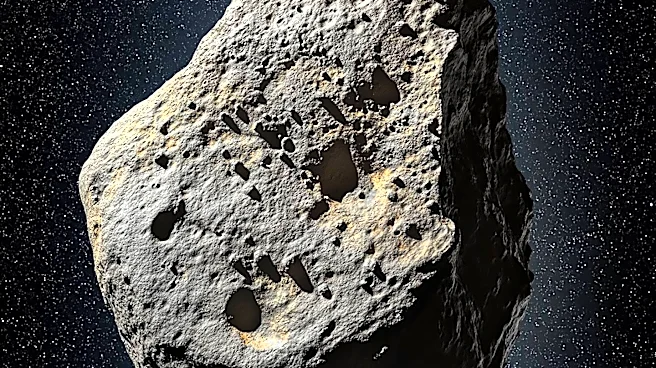
A meteorite that crashed into a home in Hillsborough, New Jersey, in 2024 has been found to contain the building blocks of life, according to astronomers. The meteorite, named Hillsborough, is considered one of the most scientifically valuable ever recovered
due to its diverse suite of carbon-bearing compounds, amino acids, and other prebiotic molecules. These findings suggest that such meteorites may have contributed to the organic inventory of the early solar system, potentially bringing materials to Earth that supported the development of life. The meteorite entered the atmosphere at 32,000 mph, creating a shockwave felt across New York and New Jersey. Its preservation by the homeowner allowed scientists to conduct a detailed analysis, revealing its classification as a CM1/2 carbonaceous chondrite, a rare and primitive type of meteorite.
Why It's Important?
The discovery of life-building compounds in the Hillsborough meteorite provides valuable insights into the origins of life on Earth. It supports the theory that meteorites could have delivered essential organic materials to the early Earth, facilitating the emergence of life. This finding enhances our understanding of the role of extraterrestrial objects in shaping the chemical environment necessary for life. The study of such meteorites can also inform the search for life beyond Earth, as similar compounds may exist on other planets or moons. The Hillsborough meteorite's unique composition makes it a critical piece of evidence in unraveling the mysteries of life's beginnings.