


What's Happening?
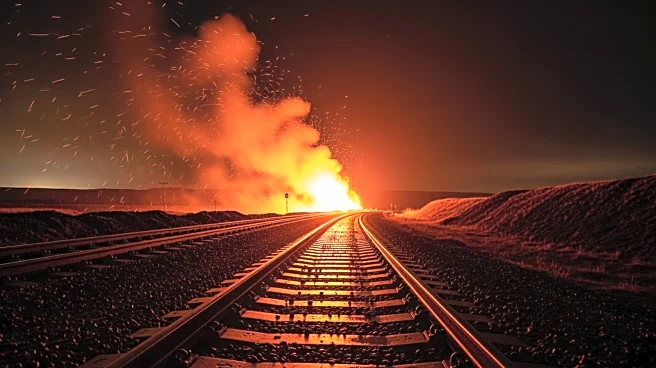
A tragic train accident occurred in southern Mexico, resulting in the deaths of at least 13 people and injuring dozens more. The incident took place when the Interoceanic Train, which connects the states of Oaxaca and Veracruz, derailed near the town
of Nizanda. The train was carrying 241 passengers and nine crew members at the time of the accident. Mexican President Claudia Sheinbaum confirmed the fatalities and stated that 98 people were injured, with five in serious condition. The train service, inaugurated in 2023, is part of a broader initiative to enhance train travel and infrastructure in southern Mexico. Government agencies have been dispatched to the site to assist the injured and manage the aftermath.
Why It's Important?
The derailment of the Interoceanic Train highlights significant safety and infrastructure challenges in Mexico's rail system. This incident could impact public confidence in rail travel and the government's broader infrastructure development plans. The Interoceanic Train is a key component of Mexico's strategy to transform the Isthmus of Tehuantepec into a strategic trade corridor, linking the Pacific and Atlantic Oceans. The accident may prompt a reevaluation of safety protocols and investment in rail infrastructure to prevent future tragedies. Additionally, the incident underscores the need for effective emergency response mechanisms to handle such disasters.
What's Next?
In the wake of the accident, Mexican authorities are likely to conduct a thorough investigation to determine the cause of the derailment. This could lead to policy changes or increased investment in rail safety measures. The government may also face pressure to expedite improvements in rail infrastructure to ensure the safety of passengers and support the economic goals associated with the Interoceanic Train project. Stakeholders, including government officials and transportation experts, will likely engage in discussions to address the safety concerns raised by this incident.