






What's Happening?
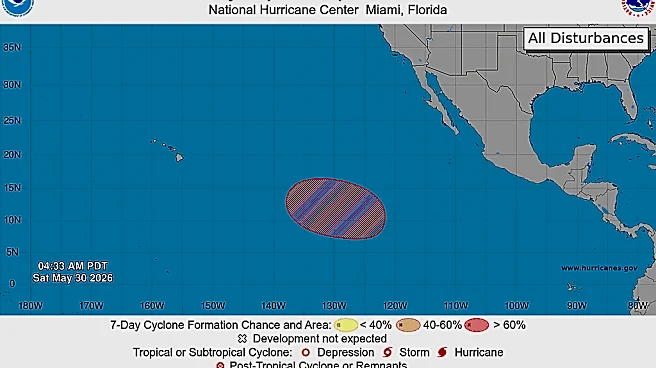
The National Oceanic and Atmospheric Administration (NOAA) is gearing up for the 2026 Atlantic Hurricane Season, which officially begins on June 1. According to NOAA, there is a 55% chance of a below-normal hurricane season this year. In preparation,
NOAA is emphasizing the importance of cutting through online misinformation and encouraging those at risk to prepare and rely on trusted warnings. The agency is also celebrating the 50th anniversary of 'Miss Piggy,' one of its Hurricane Hunter aircraft, which plays a crucial role in gathering data from within hurricanes. This data, collected by drones and aircraft, has significantly improved the accuracy of forecasts from the National Hurricane Center (NHC). Additionally, the NHC is launching a new mobile-friendly website and updating its forecast cone graphics to better inform the public.
Why It's Important?
The preparations for the 2026 hurricane season are critical for minimizing the impact of potential storms on communities across the Atlantic region. Accurate forecasting and effective communication are essential for ensuring public safety and reducing economic losses. By improving forecast accuracy and enhancing public communication tools, NOAA aims to better equip individuals and local governments to respond to hurricane threats. This is particularly important in an era where misinformation can spread rapidly online, potentially leading to inadequate preparation and increased risk. The advancements in technology and communication strategies underscore NOAA's commitment to safeguarding lives and property during hurricane season.
What's Next?
As the hurricane season progresses, NOAA and the NHC will continue to monitor storm developments and provide updates to the public. The new mobile-friendly website and updated forecast graphics are expected to enhance public engagement and understanding of hurricane risks. Local governments and emergency management agencies will likely use these tools to coordinate preparedness efforts and response strategies. The ongoing use of advanced technology, such as drones and Hurricane Hunter aircraft, will play a pivotal role in refining forecasts and ensuring timely warnings. Stakeholders, including policymakers and community leaders, will need to remain vigilant and responsive to NOAA's advisories throughout the season.