



What's Happening?
Moss Point, Mississippi, is developing a stormwater park behind St. Joseph Catholic Church to address persistent flooding and water quality issues. The vacant field, purchased by the city for $118,500 using funds from the Gulf of Mexico Energy Security
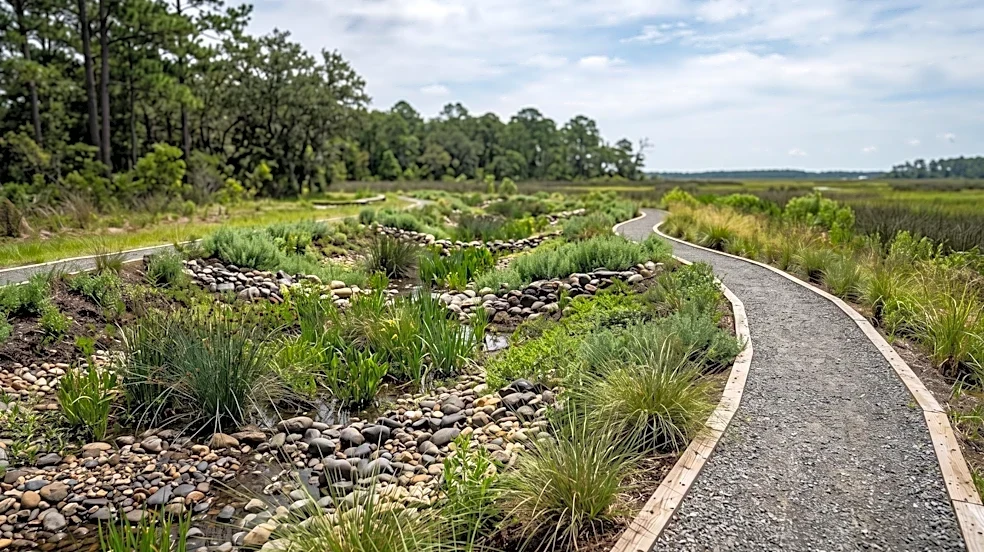
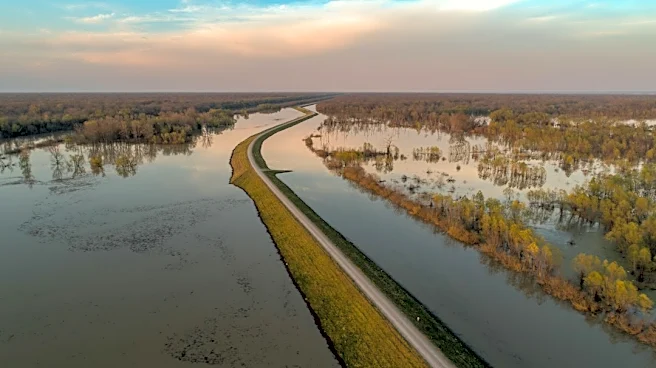
Act, will be transformed into a green infrastructure project capable of holding up to 300,000 gallons of stormwater during heavy rainfall. The National Oceanic and Atmospheric Administration has provided $319,000 for project planning. The park will utilize plants and soil to filter runoff, reducing pollutants before they enter local waterways like the Escatawpa River and Mississippi Sound. This initiative aims to alleviate flooding in areas such as Rose Drive, which is prone to inundation due to its lower elevation and an aging drainage system. Beyond its primary function, the park will also serve as a public recreational space, featuring a walking path, benches, lighting, and future playground equipment. The project is a collaborative effort with the Grand Bay National Estuarine Research Reserve, building on previous green infrastructure successes in the city, such as rain gardens at Kreole Elementary School.
Why It's Important?
This stormwater park project is significant for Moss Point as it directly addresses critical environmental and public safety concerns. The city, nicknamed 'The River City,' has historically struggled with flooding due to its geographical location and an outdated drainage infrastructure, exacerbated by a growing population. By implementing green infrastructure, Moss Point aims to enhance its resilience against severe weather events, which are becoming more frequent and intense. Improved water quality will have positive ecological impacts on the local estuaries and the broader Mississippi Sound, protecting marine habitats and biodiversity. For residents, the park offers tangible benefits: reduced property damage from flooding, a healthier environment, and a new public space for recreation and community engagement. This project also serves as a model for other communities facing similar challenges, demonstrating how natural solutions can be integrated into urban planning to achieve multiple environmental and social benefits. The funding mechanisms, including federal and state programs, highlight a growing recognition of the importance of investing in sustainable infrastructure.
What's Next?
The next phase for the Moss Point stormwater park involves securing approximately $5 million in construction funding, which is expected to come from Mississippi’s Natural Resource Damage Assessment program. While the funding process is still being finalized, it is anticipated to be available by the end of 2026. Following this, the Mississippi Department of Marine Resources and the Mississippi Department of Environmental Quality will need to finalize an agreement, after which the bidding process for construction partners can commence. Construction is tentatively projected to begin around March, though this timeline is subject to change. Once construction starts, the project is estimated to take two to three years to complete. During this period, residents can expect to see the transformation of the vacant lot into a functional stormwater management system and a public park. The Grand Bay National Estuarine Research Reserve will continue its partnership, potentially monitoring the park's effectiveness in pollutant removal, similar to their work with rain gardens at Kreole Elementary School.
Beyond the Headlines
The Moss Point stormwater park represents a broader shift in urban planning towards nature-based solutions for infrastructure challenges. This project moves beyond traditional 'gray' infrastructure (e.g., concrete pipes and drains) by integrating ecological processes to manage stormwater, offering a more sustainable and often more cost-effective approach. The dual purpose of the park—flood mitigation and public recreation—underscores a growing trend to create multi-functional public spaces that enhance both environmental health and community well-being. Ethically, it reflects a commitment to environmental justice by addressing long-standing issues in a community vulnerable to climate impacts. Legally, the project leverages federal and state environmental protection funds, indicating a policy direction that supports ecological restoration and resilience. Culturally, the park could foster a greater appreciation for natural systems within the community, encouraging stewardship and environmental education. This initiative could inspire further green infrastructure development across the Gulf Coast, promoting a more resilient and sustainable future for coastal communities.