




What's Happening?
South Korea's government announced plans to establish a presidential office in the administrative city of Sejong by August 2029. This move is part of a broader strategy to decentralize power and reduce the dominance of the Seoul metropolitan region. Approximately
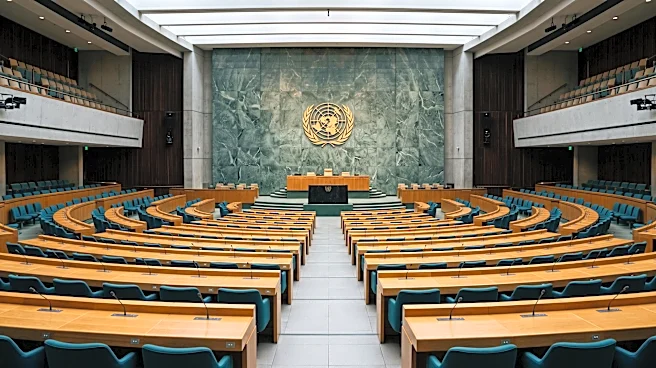
350 public institutions are slated for relocation from Seoul, with the process beginning in 2027. Additionally, an extra National Assembly building is projected to be completed in Sejong by 2033. Prime Minister Han Seong-sook stated that these measures aim to address the concentration of population, capital, businesses, and infrastructure in the capital region, while other parts of the country face demographic decline. The government intends to prioritize central government agencies with the largest scale or relocation impact for the initial phase of moves. Amendments to the law governing Sejong's development will be sought to allow the relocation of ministries currently excluded, such as the Justice Ministry and the Gender Equality Ministry. The Prosecution Service and the National Police Agency will also relocate once their new headquarters are built. This initiative marks the second significant round of public sector relocations, following the transfer of 43 central government agencies to Sejong between 2012 and 2021. The government also plans to cut or restructure 109 public institutions by consolidating overlapping functions and merging smaller bodies, including state power generators and port authorities.
Why It's Important?
This ambitious relocation plan signifies a major governmental effort to rebalance South Korea's national development, moving away from the historical over-concentration in Seoul. The decentralization of governmental and public institutions could lead to significant economic and social shifts across the country. By moving key administrative functions to Sejong, the government aims to stimulate regional economies, create new job opportunities outside the capital, and alleviate the pressures of overpopulation and high living costs in Seoul. This could foster more equitable growth and development nationwide, potentially reducing regional disparities. For businesses and citizens, the relocation of government agencies might necessitate adjustments in operations and access to public services. The establishment of a presidential office in Sejong elevates its status as a political center, potentially attracting further investment and development. The restructuring of public institutions, including the consolidation of power generators and port authorities, suggests a drive for greater efficiency and potentially a more streamlined public sector, which could have long-term implications for national infrastructure and resource management. This initiative reflects a strategic vision to build a more balanced and resilient national framework.
What's Next?
The relocation process is scheduled to commence in the first half of 2027, with central government agencies being the initial focus. The government will actively pursue amendments to existing laws to facilitate the transfer of ministries currently exempt from relocation, such as the Justice Ministry and the Gender Equality Ministry. Construction of new headquarters for the Prosecution Service and the National Police Agency will proceed, followed by their eventual relocation. The presidential office in Sejong is expected to be operational by August 2029, and the additional National Assembly building is slated for completion by 2033. Concurrently, the government will implement plans to cut or restructure 109 public institutions, involving consolidation and mergers. These actions will likely trigger a series of logistical challenges and require careful coordination to ensure a smooth transition of operations and services. Stakeholders, including government employees, businesses, and residents in both Seoul and Sejong, will need to adapt to these significant changes. The success of this decentralization strategy will depend on effective implementation and the ability to mitigate potential disruptions during the transition period.
Beyond the Headlines
The South Korean government's decision to move its presidential office and numerous public institutions to Sejong reflects a deeper societal and political aspiration to address the long-standing issue of over-centralization. This move is not merely about physical relocation but represents a strategic attempt to foster a more balanced national identity and development model. The concentration of power and resources in Seoul has led to significant challenges, including housing crises, traffic congestion, and a widening gap between the capital and other regions. By decentralizing, the government aims to cultivate regional self-sufficiency and reduce the 'Seoul Republic' phenomenon, where all major opportunities and decisions are perceived to emanate from the capital. This could lead to a cultural shift, encouraging more people to consider living and working outside Seoul, thereby revitalizing smaller cities and provinces. The ethical implications involve ensuring equitable access to public services and opportunities for all citizens, regardless of their location. Long-term, this initiative could redefine South Korea's urban landscape, economic geography, and political dynamics, potentially leading to a more distributed and resilient national structure.