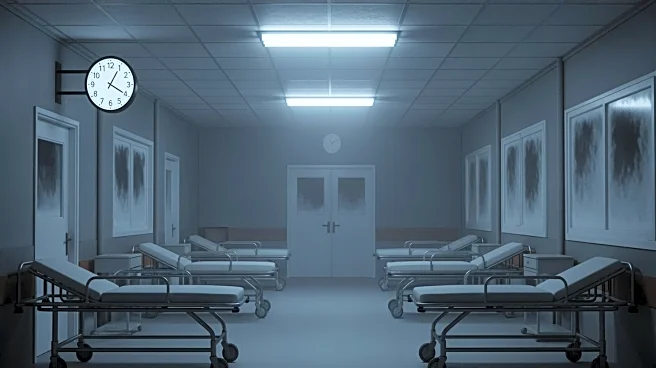

What's Happening?
The United Kingdom's National Health Service (NHS) is currently facing a severe crisis exacerbated by a combination of a 'flu-nami' and a five-day strike by resident doctors. Health Secretary Wes Streeting
has likened the situation to a precarious Jenga tower, warning of potential collapse. Despite annual funding increases, the NHS has been in a perpetual state of emergency, struggling to cope with routine procedures and overflowing hospital corridors, especially during the winter months. A campaign is underway to discourage people from visiting hospitals for less serious ailments, reminiscent of COVID-era stay-at-home advisories. As of October, 6.24 million patients in England are waiting for treatment, highlighting the system's inability to meet demand.
Why It's Important?
The situation with the NHS serves as a cautionary tale for the United States, where a significant portion of the population supports Medicare-for-all. The NHS, funded and operated by taxpayers, relies on rationing treatment, leading to long wait times for patients with serious health issues. This crisis underscores the challenges of a single-payer system, where government control can lead to inefficiencies and political entanglements. Despite high healthcare spending, the UK's outcomes lag behind countries like Australia and Denmark. The ongoing strikes by resident doctors, despite recent pay increases, further complicate the situation, highlighting the difficulties in reforming a system deeply entrenched in public entitlement.
What's Next?
The NHS crisis is likely to continue unless significant reforms are implemented. However, reform is challenging due to the public's strong attachment to the NHS. The UK government may need to explore alternative healthcare models that balance universal access with efficiency. The ongoing strikes by resident doctors indicate potential for further disruptions unless their demands are addressed. The situation may prompt other countries, including the U.S., to reconsider the feasibility of adopting similar healthcare systems, weighing the benefits of universal access against the risks of inefficiency and political interference.
Beyond the Headlines
The NHS crisis highlights broader ethical and cultural issues surrounding healthcare entitlement and government responsibility. The devotion to the NHS in the UK reflects a cultural commitment to universal healthcare, yet it also reveals the challenges of maintaining such a system in the face of growing demands and limited resources. The situation raises questions about the sustainability of single-payer systems and the role of government in healthcare. It also underscores the need for innovative solutions that can provide universal access without compromising quality and efficiency.