


What's Happening?
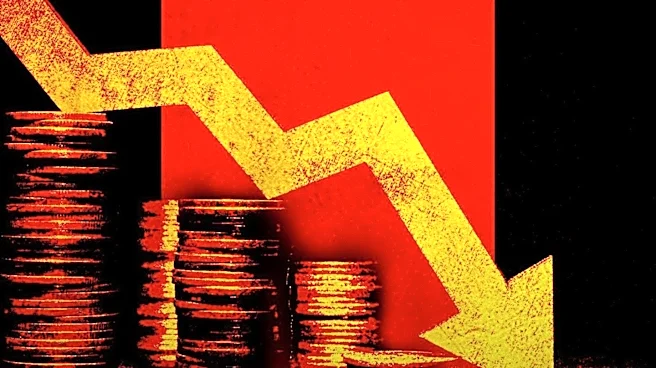
German humanitarian aid organizations are confronting significant challenges due to drastic funding cuts, with reductions of 30–40 percent in public humanitarian funding. This marks the end of an era of growth for these organizations, which had expanded
significantly between 2014 and 2024. A study by the Centre for Humanitarian Action reveals that while staffing and operational functions grew, policy capacities did not keep pace, remaining more reactive than proactive. The sector is described as structurally ill-prepared for the current crisis, lacking a clear vision for the future and suffering from a threefold structural weakness: incentive structures that reward growth over impact, a fragmented landscape of actors, and a consensus-based culture that undervalues strategic activities. The study proposes five approaches for transformation, including redefining their role, critically examining fragmented program logic, aligning technical specialization, recognizing humanitarian action as inherently political, and clarifying their identity as independent civil society actors or state-affiliated partners.
Why It's Important?
The funding cuts and structural weaknesses affecting German aid organizations have significant implications for the global humanitarian system, including potential ripple effects on U.S. humanitarian efforts and international partnerships. Germany has historically been a major donor, and a reduction in its capacity to provide aid could create gaps in critical humanitarian responses worldwide. For the U.S., this situation underscores the importance of diversified funding for humanitarian initiatives and the need for robust international collaboration. The study's findings about the challenges of growth-driven incentives and fragmented efforts resonate with broader discussions in the humanitarian sector about efficiency, impact, and strategic coherence. A weakened German aid sector could strain resources and increase the burden on other donor nations and organizations, potentially impacting the scale and effectiveness of global humanitarian interventions.
What's Next?
German humanitarian aid organizations are under pressure to adapt in both the short and medium term. In the short term, they must consolidate and improve efficiency to cope with shrinking resources. Over the medium term, they are urged to fundamentally re-evaluate their desired outcomes and the structures needed to achieve them. The proposed approaches for transformation suggest a move towards more strategic and politically engaged humanitarian action. This includes a critical examination of current operational models and a clarification of their identity within the evolving global aid landscape. The advocacy work on Gaza from 2023 onwards and a shift in Germany's foreign policy self-image, reflected in the 2024 Humanitarian Strategy, indicate a potential turning point towards more proactive engagement, but significant internal reforms are still required to address the identified structural weaknesses.
Beyond the Headlines
The challenges faced by German aid organizations highlight a deeper, systemic issue within the global humanitarian sector: the tension between rapid growth driven by funding availability and the development of sustainable, strategic capacities. The study's critique of incentive structures that prioritize growth over impact, and a fragmented actor landscape, points to a need for fundamental reform across the international aid community. This situation also brings to the forefront the political nature of humanitarian action, urging organizations to embrace advocacy and policy work more explicitly. The question of whether aid organizations see themselves as independent civil society actors or state-affiliated partners is crucial for maintaining their neutrality and effectiveness in increasingly politicized conflicts. This introspection could lead to a redefinition of humanitarian principles and practices, influencing how aid is delivered and perceived globally in the coming decades.