





What's Happening?
The monsoon season has officially commenced in parts of Asia, including India and Thailand, bringing significant rainfall crucial for agriculture. The south-west monsoon is driven by a temperature difference between the Asian landmass and the Indian Ocean,
which creates a pressure difference that draws moisture-laden ocean air inland. This results in intense rainfall as the humid air rises and condenses into clouds. In India, the monsoon onset was declared in the Kerala region, slightly delayed from its average start date. The region has already experienced substantial rainfall, with forecasts predicting more in the coming days. In Thailand, the monsoon season began on May 15, with heavy rainfall recorded in the south-west. The Thai meteorological department has issued warnings for strong monsoon winds over the Andaman Sea, advising small vessels to remain ashore.
Why It's Important?
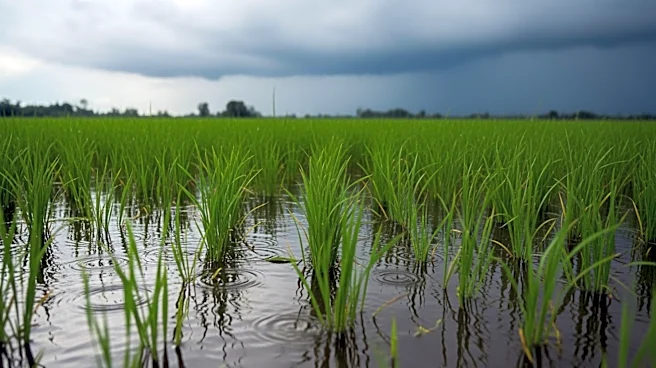
The onset of the monsoon season is vital for agriculture in Asia, particularly in India, where farmers rely on the rains for crops like rice and cotton. The timely arrival of the monsoon allows farmers to plant early, reducing the risk of prolonged dry periods that could affect crop yields. The monsoon also plays a crucial role in replenishing water supplies and supporting the region's economy. However, the Indian meteorological department has forecasted below-normal rainfall for the season, partly due to expected El Niño conditions, which could impact agricultural productivity and water availability. In Thailand, the heavy rains and strong winds pose risks to maritime activities and could lead to flooding and landslides, affecting local communities and infrastructure.
What's Next?
As the monsoon season progresses, regions in India and Thailand will continue to monitor rainfall patterns and prepare for potential weather-related challenges. Farmers will need to adjust their planting schedules based on rainfall forecasts, while authorities in both countries will focus on mitigating the risks of flooding and landslides. The development of El Niño conditions will be closely watched, as it could further influence weather patterns and rainfall distribution. Governments may need to implement measures to support affected communities and ensure water resources are managed effectively.