
What's Happening?
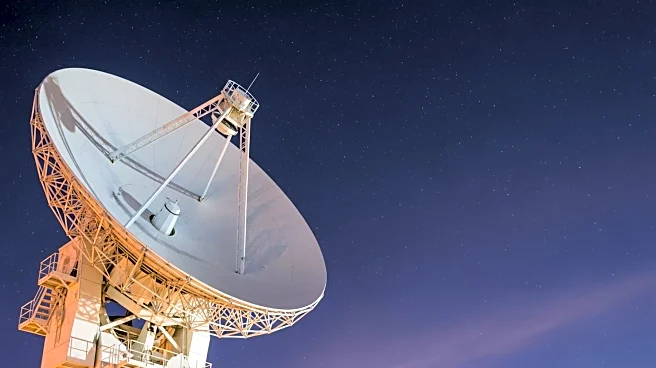
The Arecibo Observatory, which had been out of service due to damage from Hurricane Maria, resumed its radar operations from December 15-19, 2017, to observe the near-Earth asteroid 3200 Phaethon. This
event marked the asteroid's closest approach to Earth until the year 2093. The radar images captured during this period revealed new details about the asteroid, including its spheroidal shape and a larger diameter than previously estimated. The asteroid was found to be approximately 3.6 miles (6 km) in diameter, compared to the earlier estimate of 3 miles (4.8 km). Additionally, the images showed a depression near the equator and a dark spot near one of its poles. Phaethon is classified as a 'potentially hazardous' asteroid due to its size and proximity to Earth, making it the second largest object with this designation. It is monitored by NASA's Planetary Defense Coordination Office.
Why It's Important?
The resumption of operations at the Arecibo Observatory is significant for planetary defense and scientific research. The ability to observe and gather detailed data on potentially hazardous asteroids like 3200 Phaethon is crucial for assessing potential threats to Earth. The new findings about Phaethon's size and surface features enhance the understanding of its physical characteristics, which is vital for any future mitigation strategies. The observatory's return to functionality also underscores the importance of maintaining and supporting infrastructure that contributes to global safety and scientific advancement. The data collected can aid in refining models of asteroid behavior and improve predictions of their trajectories.
What's Next?
The observations of 3200 Phaethon will likely lead to further studies and monitoring by NASA and other space agencies. The data obtained will be analyzed to improve understanding of the asteroid's composition and behavior. This information could be used to develop strategies for potential deflection or mitigation efforts should the need arise in the future. Additionally, the successful operation of the Arecibo Observatory post-Hurricane Maria demonstrates the resilience and importance of maintaining such facilities for ongoing and future astronomical research.