
What's Happening?
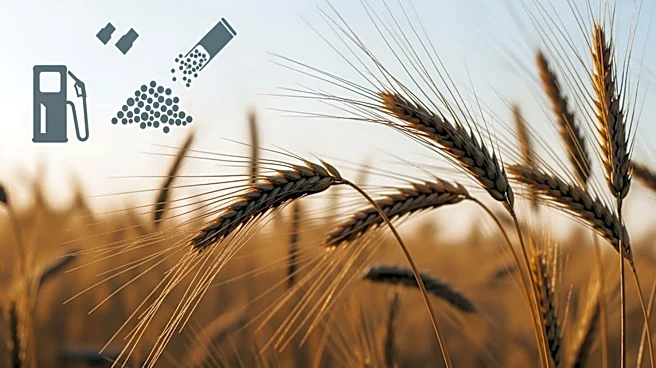
A new study by Transport & Environment (T&E) indicates that global biofuel consumption could rise by 30% this year and 70% by 2030, driven by high oil prices. This increase in demand is expected to exacerbate
rising global food prices, particularly for vegetable oils, which have already seen significant price hikes. The study warns that the push for biofuels could lead to a food crisis, as biofuels currently consume 5% of the world's fertilizers to produce just 4% of global transport fuels. The situation is further complicated by fertilizer shortages and export restrictions from major biofuel-producing countries.
Why It's Important?
The surge in biofuel demand poses a significant challenge to global food security, as it diverts essential agricultural resources away from food production. This could lead to increased food prices and potential shortages, affecting vulnerable populations worldwide. The reliance on biofuels also raises environmental concerns, as increased production could lead to deforestation and higher carbon emissions. Policymakers face the difficult task of balancing energy needs with food security and environmental sustainability, highlighting the need for more sustainable energy solutions.
What's Next?
Governments may need to reconsider their biofuel policies and explore alternative energy sources, such as electrification, to reduce reliance on biofuels. International cooperation and policy adjustments could be necessary to address the potential food crisis and ensure a sustainable energy transition. Stakeholders, including environmental groups and agricultural organizations, are likely to advocate for policies that prioritize food security and environmental protection over biofuel expansion.