






What's Happening?
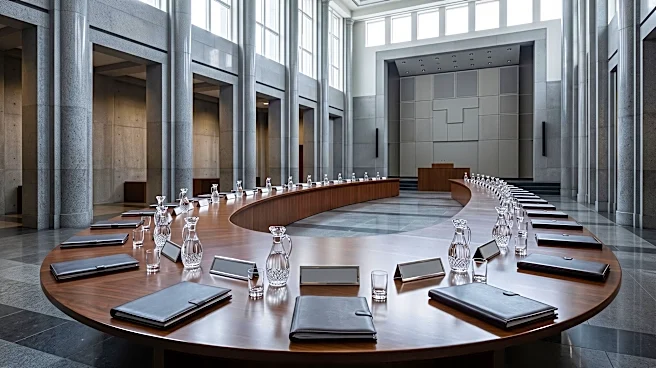
Union Minister for Foreign Affairs of Myanmar, U Tin Maung Swe, attended the 4th Minsk International High-Level Conference on Eurasian Security in Minsk, Belarus, from November 3 to 4, 2026. The conference, hosted by Belarusian Foreign Minister Maxim
Ryzhenkov, gathered over 600 delegates from more than 50 countries, including ministers, diplomats, and researchers. Belarusian President Alexander Lukashenko delivered a speech emphasizing Eurasia as a platform for unity and a region with vast resources and diverse cultures, advocating for shared responsibility in Eurasian security. Myanmar's Foreign Minister highlighted the need for a security path prioritizing partnership and cooperation over confrontation, welcoming the drafting of the 'Eurasian Charter of Diversity and Multipolarity in the 21st Century.' He also held bilateral meetings with officials from the Shanghai Cooperation Organisation (SCO), Russia, and Belarus, discussing enhanced cooperation and Myanmar's potential full membership in the SCO.
Why It's Important?
Myanmar's participation in the Minsk International High-Level Conference on Eurasian Security signifies its strategic alignment and growing engagement with a bloc of nations that often challenge Western-led international orders. For the U.S., this development is important as it indicates a strengthening of ties between Myanmar and countries like Belarus and Russia, which are currently under various international sanctions or diplomatic pressures. The discussions on a 'Eurasian Charter' and enhanced cooperation in security, economy, and trade suggest a move towards a more integrated, non-Western-centric security architecture. This could have implications for regional stability in Southeast Asia and for U.S. foreign policy objectives, particularly concerning human rights and democratic governance in Myanmar. The potential for Myanmar to become a full member of the SCO further solidifies these geopolitical shifts, potentially complicating efforts by the U.S. and its allies to influence Myanmar's trajectory.
What's Next?
Following the conference, Myanmar is expected to continue its engagement with the SCO and other Eurasian partners, potentially moving towards full membership in the Shanghai Cooperation Organisation. The discussions on bilateral cooperation with Belarus and Russia are likely to translate into concrete agreements in political, economic, and security sectors, including the potential opening of a Belarusian Embassy in Nay Pyi Taw. Myanmar's commitment to the 'Eurasian Charter' suggests its active participation in shaping a new regional security framework. These developments will be closely monitored by international observers and Western governments, including the U.S., for their implications on global geopolitical dynamics and regional stability. Further diplomatic and economic interactions between Myanmar and these Eurasian nations are anticipated as they seek to deepen their partnerships.
Beyond the Headlines
Myanmar's active participation in the Minsk International Conference on Eurasian Security and its deepening ties with Belarus and Russia represent a significant geopolitical recalibration. This move can be interpreted as a strategic pivot away from traditional Western influence, driven by a desire for alternative partnerships and a multipolar world order. Ethically, this alignment raises questions for human rights advocates, given the human rights records of some of the participating nations. Legally, the development of a 'Eurasian Charter' could challenge existing international legal frameworks and norms, particularly those championed by Western democracies. Culturally, it signifies a growing divergence in global perspectives on governance, security, and international relations. In the long term, this shift could contribute to the fragmentation of the international system, creating new spheres of influence and potentially complicating global efforts to address shared challenges like climate change, pandemics, and economic stability.