







What's Happening?
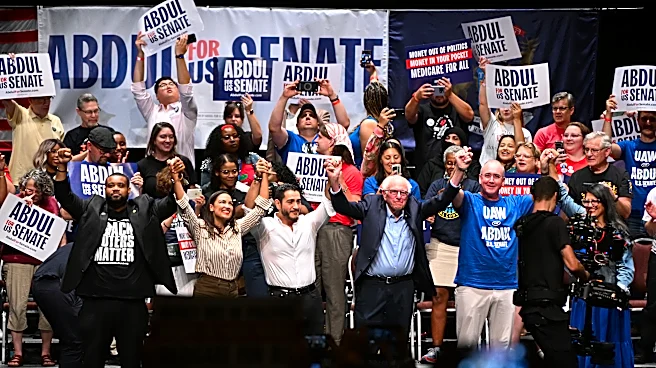
Senator Bernie Sanders' recent endorsements in Democratic primaries have sparked significant controversy within the party, particularly concerning his support for candidates challenging established incumbents. Sanders' backing of progressive candidates has
led to a clash with House Democratic leader Hakeem Jeffries, who has expressed concerns about the impact on key midterm races. The Vermont senator's influence is evident as he has endorsed over 90 candidates, with a notable success rate. However, his support for candidates like Abdul El-Sayed in Michigan has intensified debates over the party's direction, with establishment figures advocating for more moderate candidates to appeal to swing voters.
Why It's Important?
The internal conflict within the Democratic Party highlights a broader ideological struggle between progressive and moderate factions. Sanders' endorsements could reshape the party's platform and influence its electoral strategy, potentially affecting its ability to maintain or gain seats in Congress. The outcome of these primaries may determine the party's approach to key issues such as healthcare, economic inequality, and foreign policy. The tension also underscores the challenges of balancing grassroots activism with the need to appeal to a broader electorate in competitive districts.
What's Next?
As the midterm elections approach, the Democratic Party will need to navigate these internal divisions to present a unified front against Republican challengers. The results of the primaries will likely influence the party's strategy and messaging in the general election. Key races, such as those in Michigan, will serve as bellwethers for the party's future direction. Additionally, the response from party leaders and influential figures like Sanders will be crucial in determining how these ideological differences are reconciled.