


What's Happening?
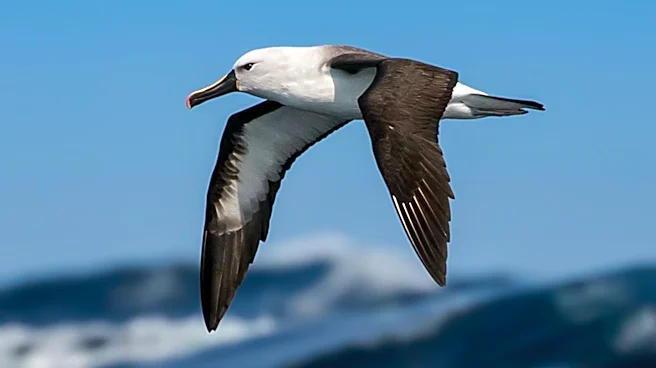
Australia has officially reported its initial mass mortality event among seabirds due to the highly pathogenic H5N1 avian influenza strain. This particular strain, identified as genotype B3.2, originated from a reassortment of the virus in North America
and subsequently spread to South America in late 2022. Its progression along the South American west coast within six months significantly impacted poultry industries, wild bird populations, and marine mammals in that region. The H5N1 virus is known for its easy transmissibility, lack of effective treatment, and its capacity to cause widespread deaths in poultry and wild birds globally. While Australia has previously experienced other bird flu variations, such as the H7 outbreak in 2024, the H5N1 strain has been ravaging other parts of the world for the past six years, decimating bird populations and affecting marine mammal species like sea lions and elephant seals. The Australian government acknowledges that eradication of this strain will be impossible, shifting focus to protecting agricultural industries and vulnerable native species.
Why It's Important?
The confirmation of H5N1 in Australia, particularly its impact on seabirds, raises significant concerns for wildlife conservation, agricultural sectors, and public health. The strain's history of causing mass mortalities in other regions, including marine mammals, indicates a potential threat to Australia's unique biodiversity, especially for already at-risk bird species. The virus's ability to mutate and its past spillover events into over 55 mammalian species, including scavenger species, domestic/farm animals, and colony mammals, highlights the broader ecological risks. Although the current Australian strain (B3.2) has not yet spread to poultry or humans, the experiences in the U.S. with different H5N1 strains (B3.13 and B1.1) infecting dairy cattle and people underscore the potential for future transmission. This situation necessitates stringent biosecurity measures and continuous monitoring to prevent the virus from adapting and crossing over into livestock and human populations, which would have severe economic and public health consequences.
What's Next?
Authorities are prioritizing the vaccination of vulnerable captive bird species, utilizing overseas-sourced vaccines as Australia currently lacks domestic production capabilities. Discussions are ongoing between the government and industry regarding the feasibility and implications of vaccinating poultry farms. Enhanced biosecurity measures, such as housing orders implemented in Victoria, are being utilized to contain the spread. Continuous tracking of the virus is crucial to detect any mutations that could increase the risk of transmission to humans. The public is advised to avoid contact with sick or dead wildlife, record sightings with a phone, and report them to the Emergency Animal Disease Hotline. CSIRO experts emphasize the importance of testing every case to monitor for genetic changes in the virus. The long-term impact on Australian native species, particularly those with already low numbers, remains a significant concern, as recovery from such a highly pathogenic bird flu could be challenging.
Beyond the Headlines
The arrival of the H5N1 avian flu strain in Australia, despite the country's previous six-year freedom from it, underscores the global interconnectedness of disease transmission and the challenges of containing highly contagious pathogens. The virus's capacity for reassortment and mutation means that even geographically isolated regions are vulnerable. This event highlights the critical need for robust international collaboration in disease surveillance, research, and vaccine development. The ethical considerations surrounding the allocation of limited vaccine resources, particularly between captive vulnerable species and commercial poultry, will likely become more pronounced. Furthermore, the potential for 'ecological perfect storms' where the virus spills over into new host species, as seen with marine mammals in South America, raises questions about the long-term ecological resilience of ecosystems facing multiple conservation threats. The ongoing monitoring and research into the virus's evolution are not just about preventing immediate outbreaks but also about understanding and mitigating future zoonotic risks.