





What's Happening?
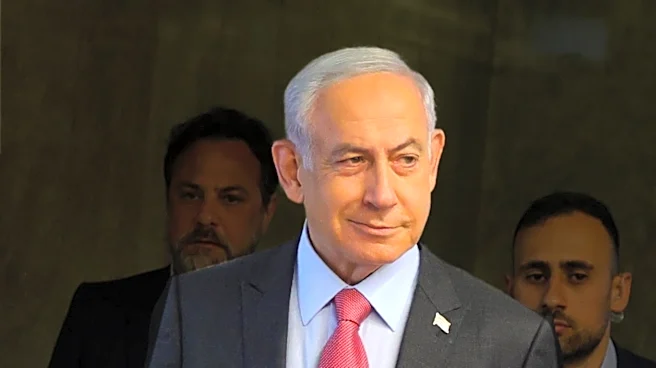
Prime Minister Benjamin Netanyahu's office released a timeline of his actions on October 7, the day Hamas launched its attack. The timeline details his initial notification at 6:29 a.m. by his military secretary, Maj. Gen. Avi Gil, about an ongoing attack from
the Gaza Strip. Subsequent calls and assessments occurred, with Netanyahu arriving at the Kirya military headquarters at 8:22 a.m. and holding a situation assessment with security leaders at 9:55 a.m. During this assessment, he instructed to seal the border, ordered a full reserve mobilization, and issued a wartime directive. The Prime Minister's Office asserts that Netanyahu continuously monitored events and acted with sharpness and clarity. However, former senior officials and opposition leader Yair Lapid have raised questions about the timing of his arrival at the Kirya and the perceived delay in his active engagement, suggesting he "barely functioned and did not initiate a single move" until later in the day. The timeline has sparked debate about the effectiveness of the initial response and the prime minister's role in the critical early hours of the attack.
Why It's Important?
This detailed timeline and the ensuing debate are important as they directly impact the public's perception of leadership and accountability during a national crisis. The questions raised about Prime Minister Netanyahu's actions on October 7 could have significant political ramifications, potentially influencing future elections and public trust in the government's ability to respond to security threats. For the U.S., a stable and confident Israeli leadership is a key component of regional security and diplomatic efforts. Any perceived weaknesses or controversies surrounding the initial response to such a major attack could affect U.S.-Israel relations and broader strategic alliances in the Middle East. Furthermore, the discussion about intelligence failures and the speed of decision-making during a crisis provides valuable lessons for national security protocols globally, including those of the U.S., in preparing for and reacting to unexpected large-scale attacks. The ongoing scrutiny highlights the critical need for transparent and effective leadership during times of extreme national emergency.
What's Next?
The controversy surrounding Prime Minister Netanyahu's October 7 timeline is likely to continue to be a significant point of contention in Israeli politics. Opposition leader Yair Lapid has explicitly stated his intention to establish a state commission of inquiry into the events of that day if his party forms the next government. This suggests that the questions about Netanyahu's conduct will persist and could lead to a formal investigation in the future. Such an inquiry would delve deeper into the decision-making processes, intelligence assessments, and overall governmental response, potentially leading to further revelations and accountability measures. The ongoing debate will also likely influence public discourse and political maneuvering in the lead-up to any future elections, with the handling of the October 7 attack remaining a central theme. Internationally, allies of Israel, including the U.S., will likely monitor these developments closely, as the stability and perceived effectiveness of Israeli leadership are crucial for regional security and diplomatic cooperation.
Beyond the Headlines
Beyond the immediate political implications, the debate over Prime Minister Netanyahu's October 7 timeline touches upon deeper issues of leadership, crisis management, and national resilience. The differing accounts and criticisms highlight the immense pressure and fog of war that leaders face during unprecedented attacks. It also brings to the forefront the ethical considerations of public accountability versus national unity during a prolonged conflict. The discussion about intelligence failures and the speed of response could lead to a re-evaluation of national security doctrines and emergency protocols, not just in Israel but potentially in other nations, including the U.S., that face similar threats. The long-term cultural impact could involve a shift in how the public views its leaders' roles in moments of extreme peril, emphasizing not just strategic vision but also immediate, decisive action. This event could also shape future historical narratives of the conflict, influencing how the nation remembers and learns from this critical period.