







What's Happening?
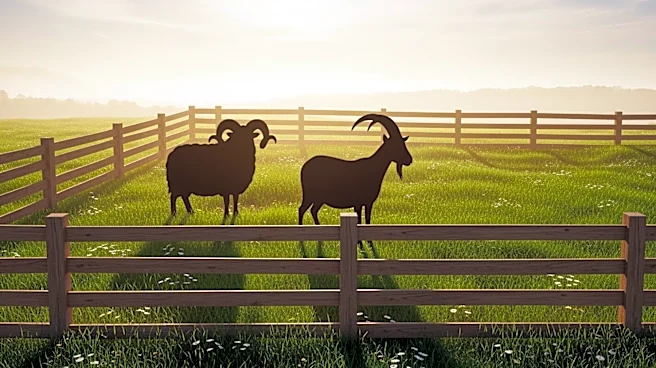
In the village of Makgabeng, Limpopo, South Africa, Kutama Nicholas Huma and his father, Mashamaite Huma, have successfully developed a profitable livestock enterprise using Meatmaster sheep and Boer goats. Despite challenges such as limited grazing land,
rugged terrain, and persistent tick pressure, the father-son duo has focused on quality livestock production. Their journey began in 2017 when Mashamaite sold his cattle to invest in small-stock production. Through strategic breeding and sound management, they have built a sustainable business that thrives under communal farming conditions.
Why It's Important?
The success of the Huma family highlights the potential for communal land to be transformed into profitable agricultural ventures through strategic planning and dedication. Their approach emphasizes the importance of quality over quantity, showcasing how superior genetics and effective management can lead to sustainable farming practices. This model serves as an inspiration for other emerging farmers in similar environments, demonstrating that profitability is achievable even in challenging conditions. The Humases' story underscores the value of continuous learning and adaptation in agriculture.
What's Next?
The Humases plan to continue improving their livestock operation by focusing on superior genetics and modern farming practices. They aim to build on their current success and further enhance the quality and marketability of their livestock. Their commitment to learning and adapting to new industry developments will likely drive future growth and innovation in their enterprise. As they continue to share their experiences, they may inspire more communal farmers to adopt similar strategies, potentially transforming the agricultural landscape in their region.