





What's Happening?
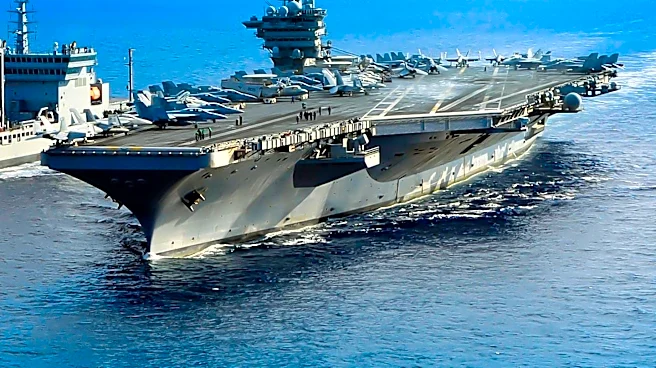
The USS Theodore Roosevelt has become the first Navy carrier to be equipped with an Unmanned Air Warfare Center, which will support the Boeing-made MQ-25A, the first operational carrier-based unmanned aircraft. This development was announced by acting
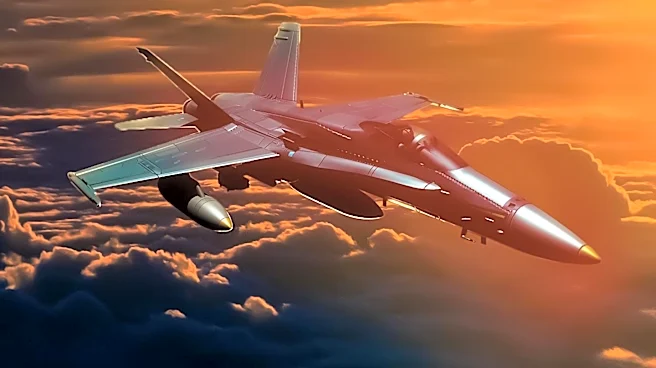
Navy Secretary Hung Cao during a Senate Armed Services Committee Hearing, indicating that the MQ-25A is moving into the low-rate initial production and deployment phase. The MQ-25A is designed to relieve the Navy’s F/A-18 Super Hornets from the aerial refueling role, allowing them to focus on strike missions. The integration of the Unmanned Carrier Aviation Mission Control System and the MD-5E Ground Control Station is critical for the operations of the unmanned aircraft refueler. The USS Theodore Roosevelt is now fully operational and deployable for MQ-25 operations, with the USS Ronald Reagan expected to follow by the end of August 2026.
Why It's Important?
The integration of the Unmanned Air Warfare Center on the USS Theodore Roosevelt marks a significant advancement in naval aviation capabilities, particularly in the realm of unmanned systems. This development allows for more efficient use of manned aircraft by freeing them from refueling duties, thereby enhancing the Navy's operational flexibility and strike capabilities. The deployment of the MQ-25A is a step forward in modernizing the Navy's fleet, potentially leading to cost savings and increased mission effectiveness. The move also reflects a broader trend in military strategy towards incorporating unmanned systems, which can operate in environments that may be too risky for manned aircraft.
What's Next?
With the USS Theodore Roosevelt now equipped to support MQ-25 operations, the Navy is poised to begin deploying the unmanned refueling drone. The USS Ronald Reagan is expected to become operational for MQ-25 operations by the end of August 2026, further expanding the Navy's capabilities. As the MQ-25A moves into production and deployment, the Navy will likely continue to integrate unmanned systems into its operations, potentially leading to further advancements in naval warfare tactics and strategy.