





What's Happening?
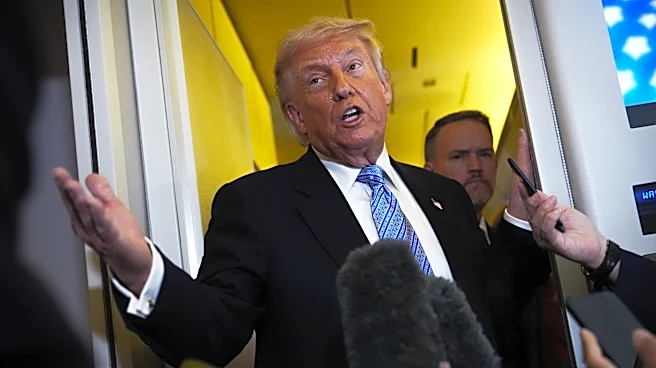
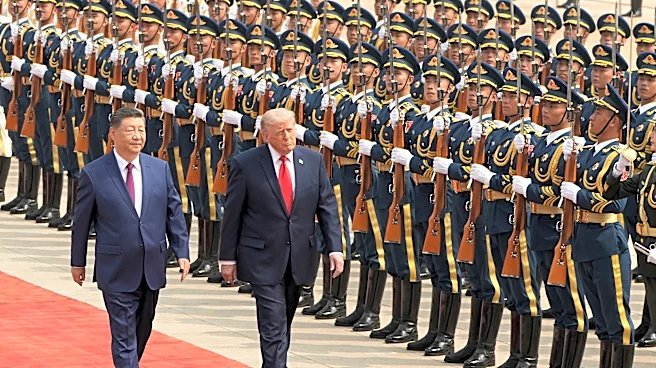
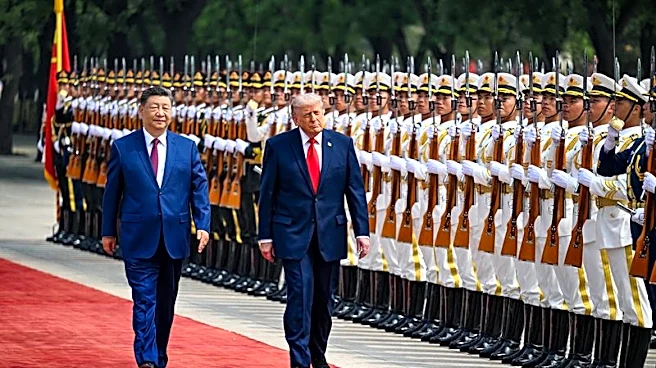
President Trump recently visited Beijing, marking the first visit by a sitting U.S. president to China in nearly a decade. The visit was characterized by a series of diplomatic and business engagements, including a state banquet hosted by Chinese President Xi
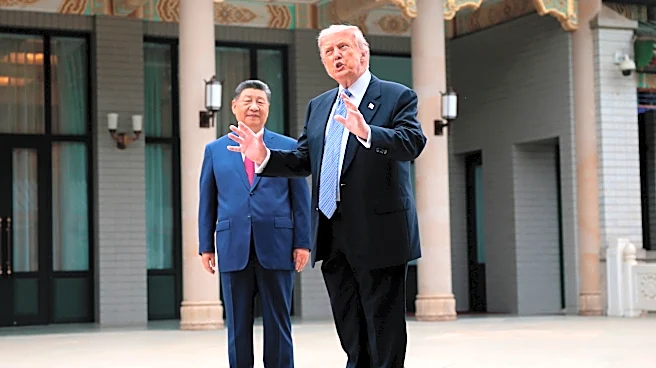
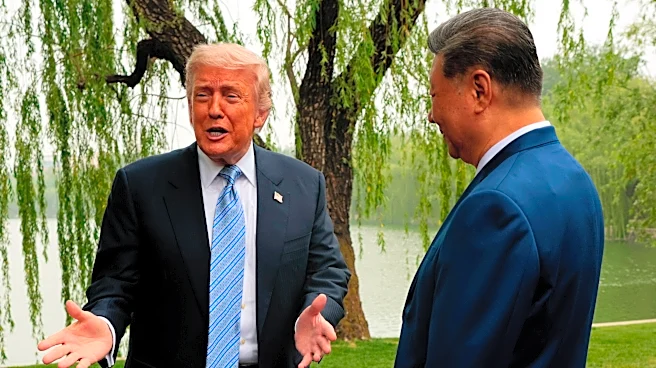
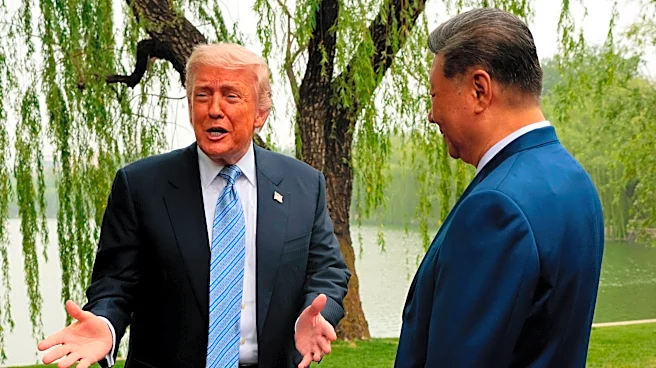
Jinping. The event was attended by American business leaders and featured a blend of Chinese and international cuisine. The visit aimed to rekindle personal ties between the leaders of the world's two largest economies. During the visit, Trump and Xi agreed to work towards a framework to stabilize bilateral relations over the next three years. The visit also included cultural exchanges, such as a private tour of the Temple of Heaven and a garden stroll at Zhongnanhai, where Xi presented Trump with rose seeds as a parting gift.
Why It's Important?
The visit underscores the importance of U.S.-China relations, particularly in the context of global economic and political dynamics. The engagement between Trump and Xi highlights efforts to address trade imbalances and foster economic cooperation. The agreement for China to purchase more American goods, including Boeing aircraft and agricultural products, could have significant implications for U.S. industries. However, the visit also highlighted ongoing tensions, particularly regarding Taiwan and export controls. The diplomatic overtures and business deals reflect a complex relationship that balances cooperation with competition, impacting global markets and international diplomacy.
What's Next?
Following the visit, both countries are expected to continue negotiations to solidify the framework for future cooperation. The potential for increased U.S. exports to China could benefit American industries, but challenges remain, particularly concerning Taiwan and trade restrictions. The visit may lead to further diplomatic engagements and business opportunities, but the underlying tensions suggest that both sides will need to navigate carefully to avoid conflicts. The outcomes of these negotiations will be closely watched by global stakeholders, as they could influence international trade policies and economic strategies.
Beyond the Headlines
The visit also highlights the cultural and symbolic aspects of diplomacy, with the state banquet and cultural exchanges serving as tools for soft power. The presence of American business leaders, including Elon Musk and Jensen Huang, underscores the role of technology and innovation in U.S.-China relations. The visit's media coverage, particularly on Chinese social media, reflects the public's interest in international diplomacy and the influence of cultural icons like President Trump. These elements contribute to a broader understanding of how diplomacy is conducted in the modern era, where public perception and media narratives play a crucial role.