



What's Happening?
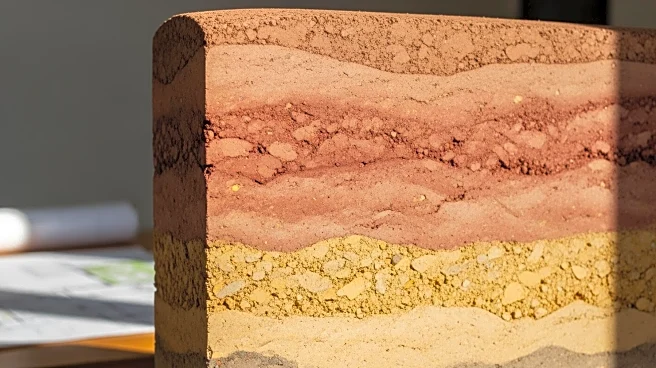
Architects are increasingly turning to rammed earth as a sustainable building material, particularly in urban settings. This material, which consists of compacted earth, has been used since the Neolithic period and is gaining attention for its eco-friendly
properties. The Rammed Earth House in Wiltshire, UK, exemplifies this trend, utilizing local materials and recycled components from demolished structures. The use of rammed earth is seen as a response to the construction industry's significant carbon emissions, which account for over a third of global emissions. Architects like Jonathan Tuckey and Roger Boltshauser are advocating for the material's use, citing its thermal mass, temperature regulation, and moisture control benefits. However, challenges such as building regulation compliance and the material's susceptibility to water and low temperatures remain.
Why It's Important?
The adoption of rammed earth in construction is significant due to its potential to reduce the carbon footprint of the building industry. As urban populations grow and the demand for sustainable infrastructure increases, materials like rammed earth offer a viable solution to mitigate climate change impacts. The material's ability to be sourced locally and its recyclability contribute to a circular construction process, reducing the need for energy-intensive materials like cement. This shift could lead to broader acceptance of bio-based materials in construction, influencing industry standards and practices. The move towards sustainable building materials also aligns with global efforts to address environmental challenges and promote green architecture.
What's Next?
The future of rammed earth in construction may involve the development of prefabricated blocks to overcome regulatory and consistency challenges. Architects are exploring the establishment of local factories to produce these blocks, minimizing transportation emissions. As the material gains popularity, it may lead to changes in building codes and insurance policies to accommodate its unique properties. The success of projects like the Rammed Earth House could inspire further innovation and experimentation in sustainable architecture, potentially influencing urban planning and development strategies worldwide.
Beyond the Headlines
The use of rammed earth highlights a cultural shift towards valuing traditional building techniques and materials. This approach not only addresses environmental concerns but also promotes a deeper connection to local landscapes and resources. The aesthetic appeal of rammed earth structures, with their unique textures and natural integration into surroundings, may influence design trends in architecture. Additionally, the material's limitations, such as its vulnerability to weather conditions, underscore the need for ongoing research and adaptation in sustainable construction practices.